
-
Sale




Safety Hand Rail – Stainless Steel Core with Anti-Slip Rubber Grip – 50cm Bathroom Support
Original price was: KSh 4,000.KSh 3,700Current price is: KSh 3,700. -
Sale
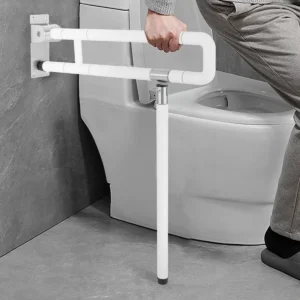
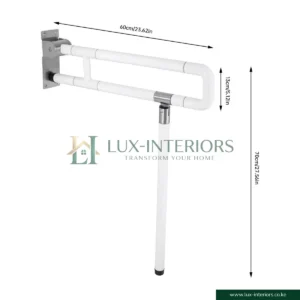
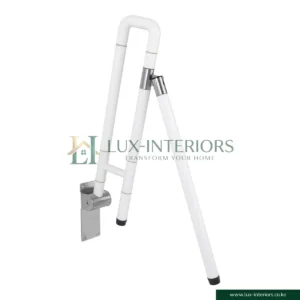
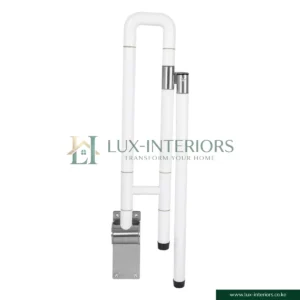
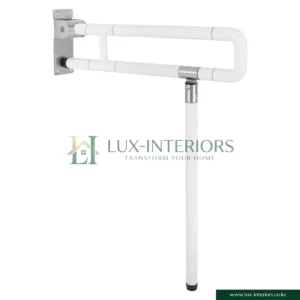
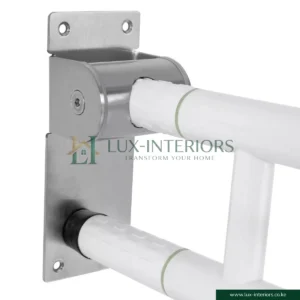
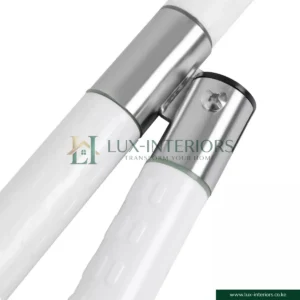
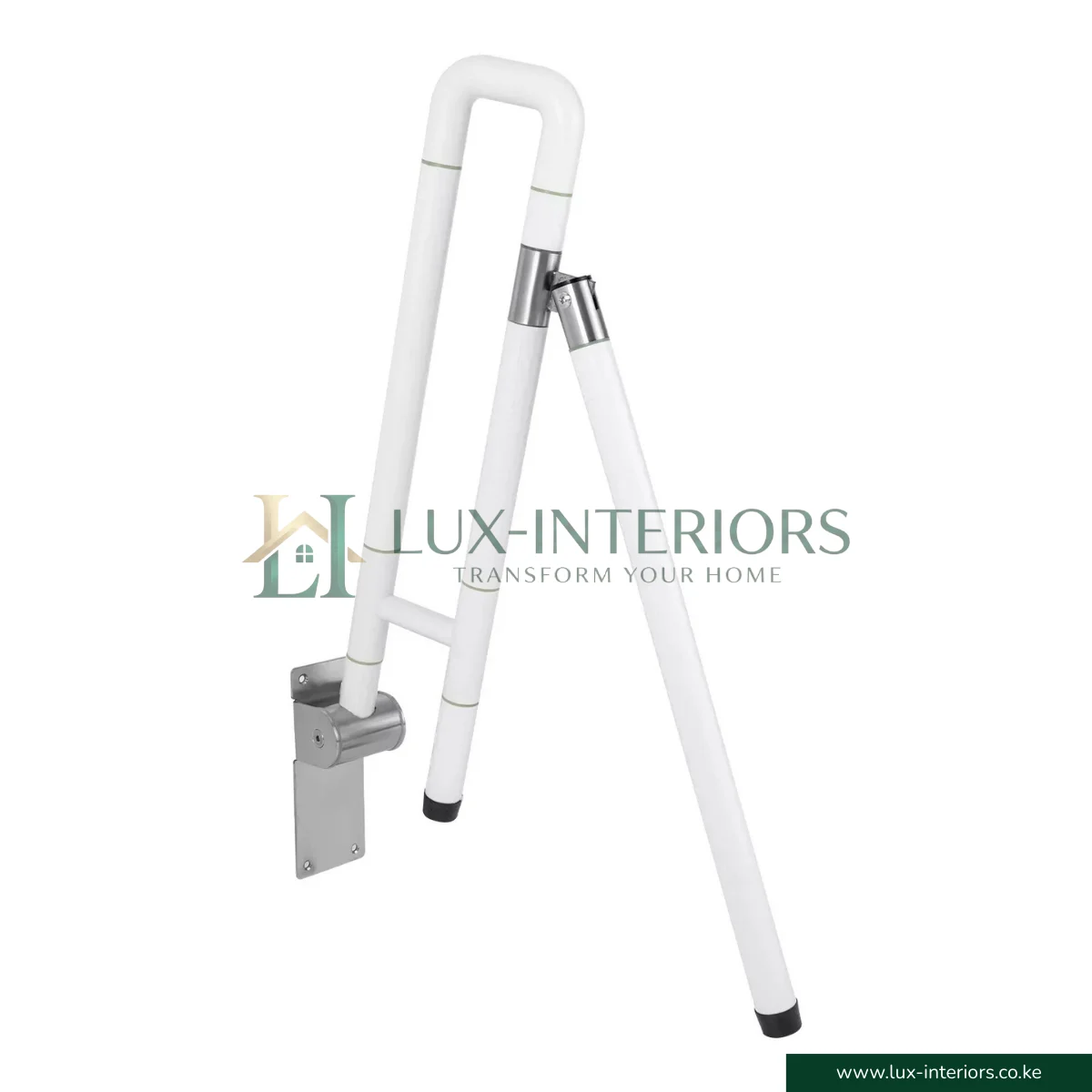
Foldable Bathroom & Toilet Grab Rail – Safety Hand Rail with Floor Stand – Stainless Steel Support Bar for Toilets & Showers
Original price was: KSh 11,000.KSh 10,000Current price is: KSh 10,000.
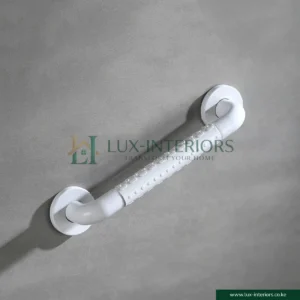
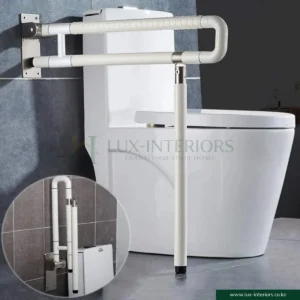

Understanding Disabled Toilet Grab Rails
Disabled toilet grab rails—often referred to as safety handrails—are engineered support bars designed to help individuals maintain balance, transfer weight, and prevent falls in wet areas.
In the bathroom, where slick tiles and wet floors present constant hazards, these rails offer crucial leverage.
For Kenyan families living in multi-generational households, grab rails provide independence to elderly family members or those recovering from injuries.
Rather than relying on physical assistance for personal hygiene, a well-positioned grab rail allows individuals to use the bathroom safely and with dignity.
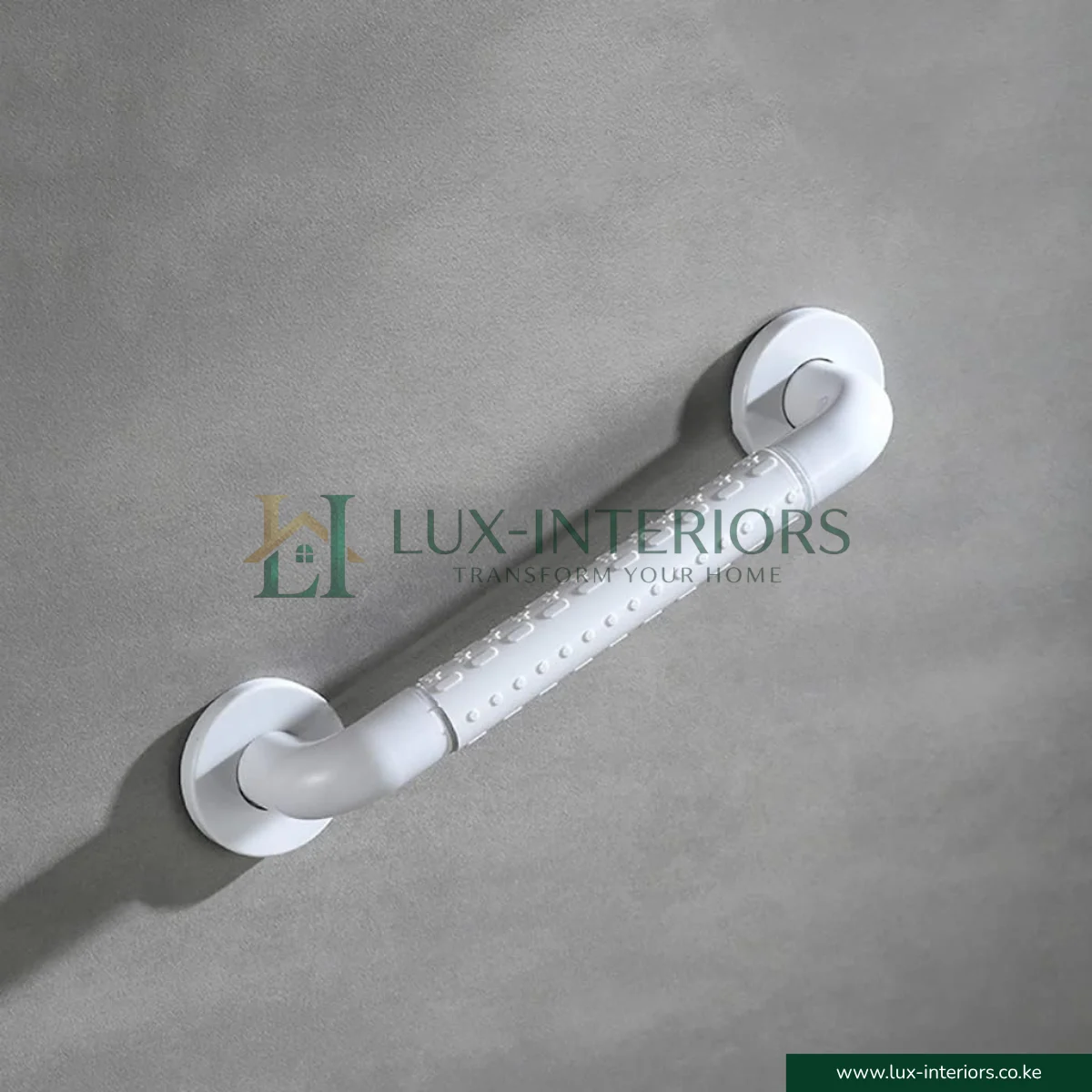
Key Types of Grab Rails and Where to Install Them
Selecting the right grab rail depends on your bathroom layout, the user’s specific mobility needs, and the available wall space.
Straight Grab Rails
These are the most versatile and common rails. They are installed horizontally, vertically, or at an angle along the wall.
- Vertical placement next to the toilet helps users pull themselves up from a seated position.
- Horizontal placement along the side wall provides steady support when transitioning onto or off the toilet seat.
Fold-Up / Drop-Down Grab Rails
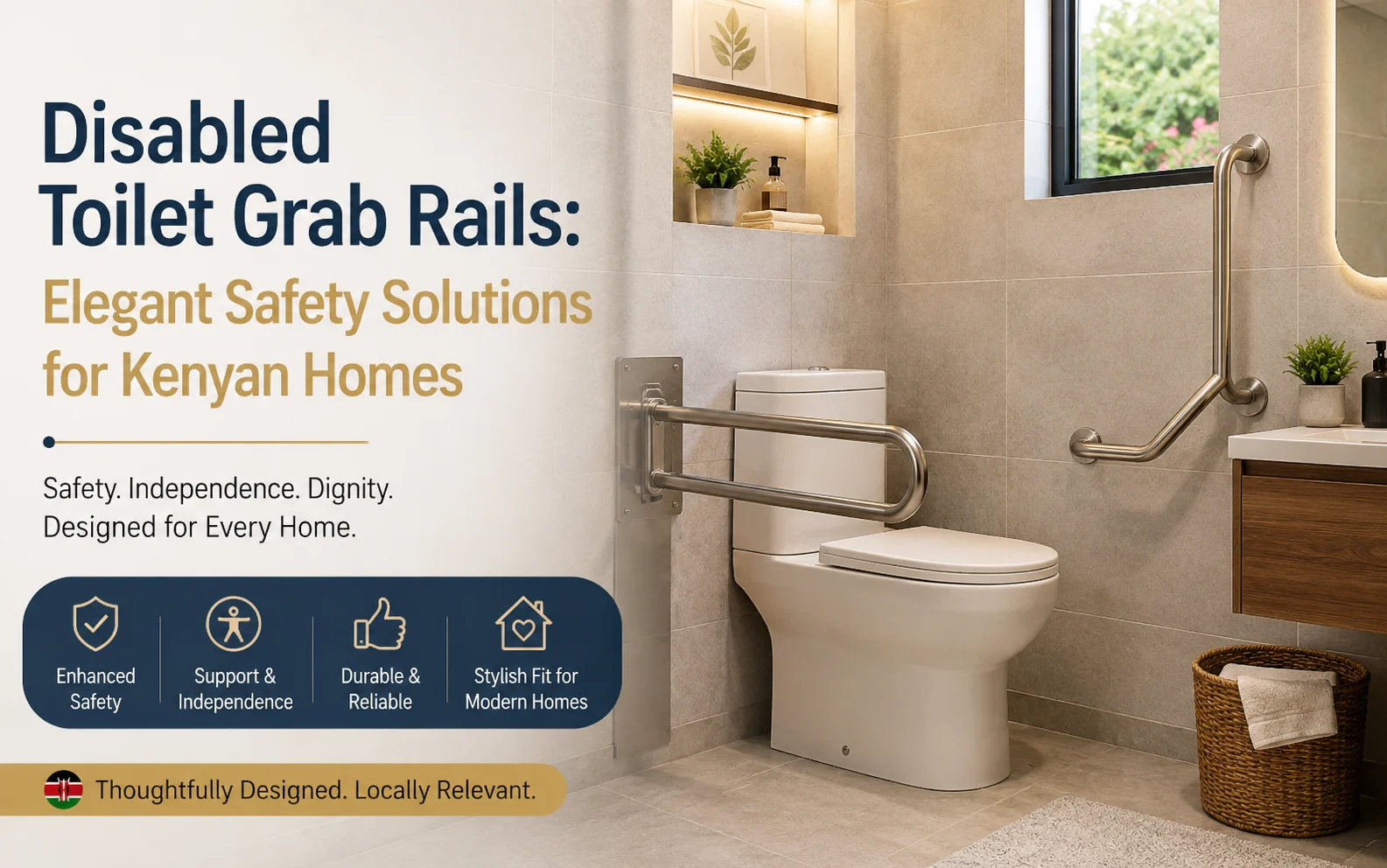
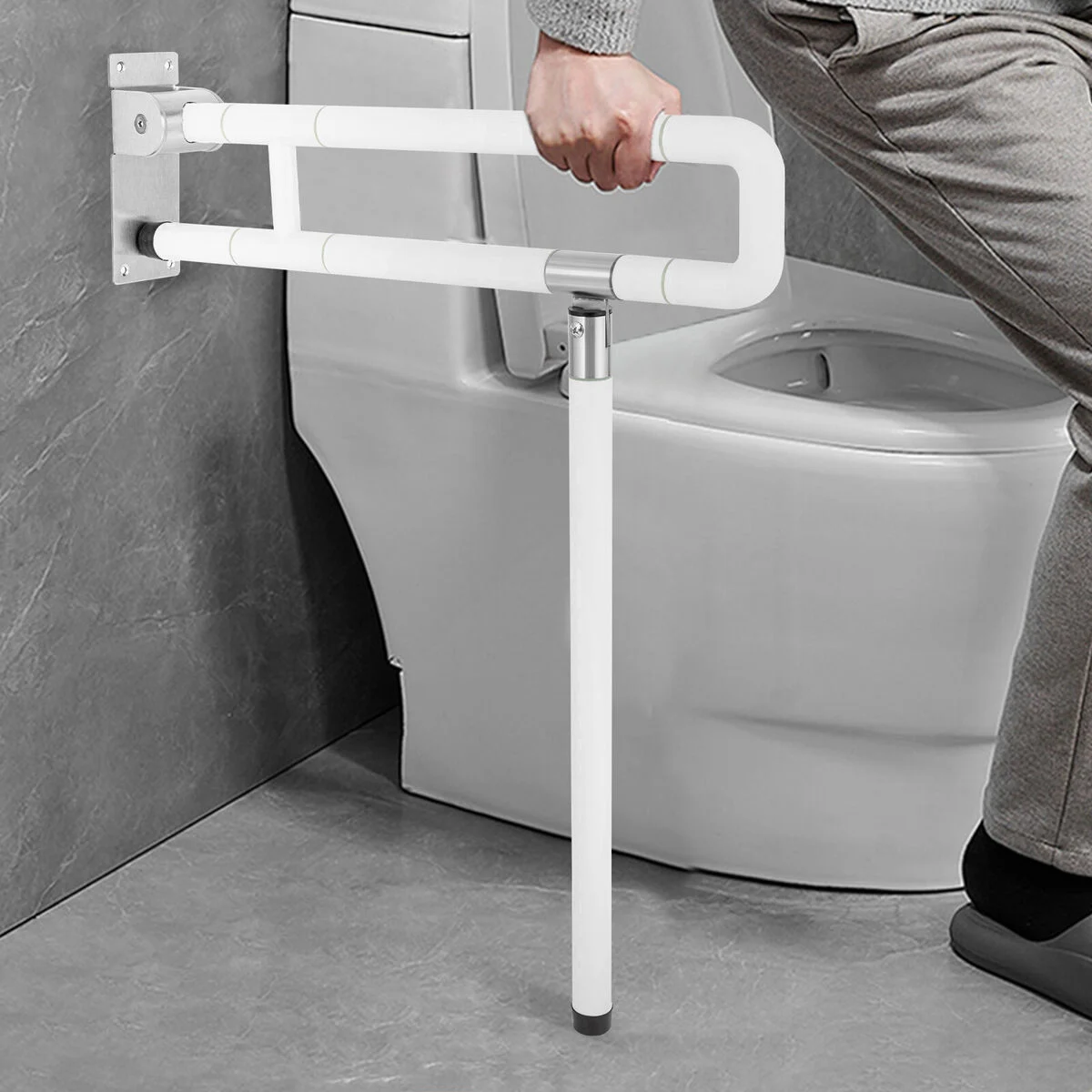
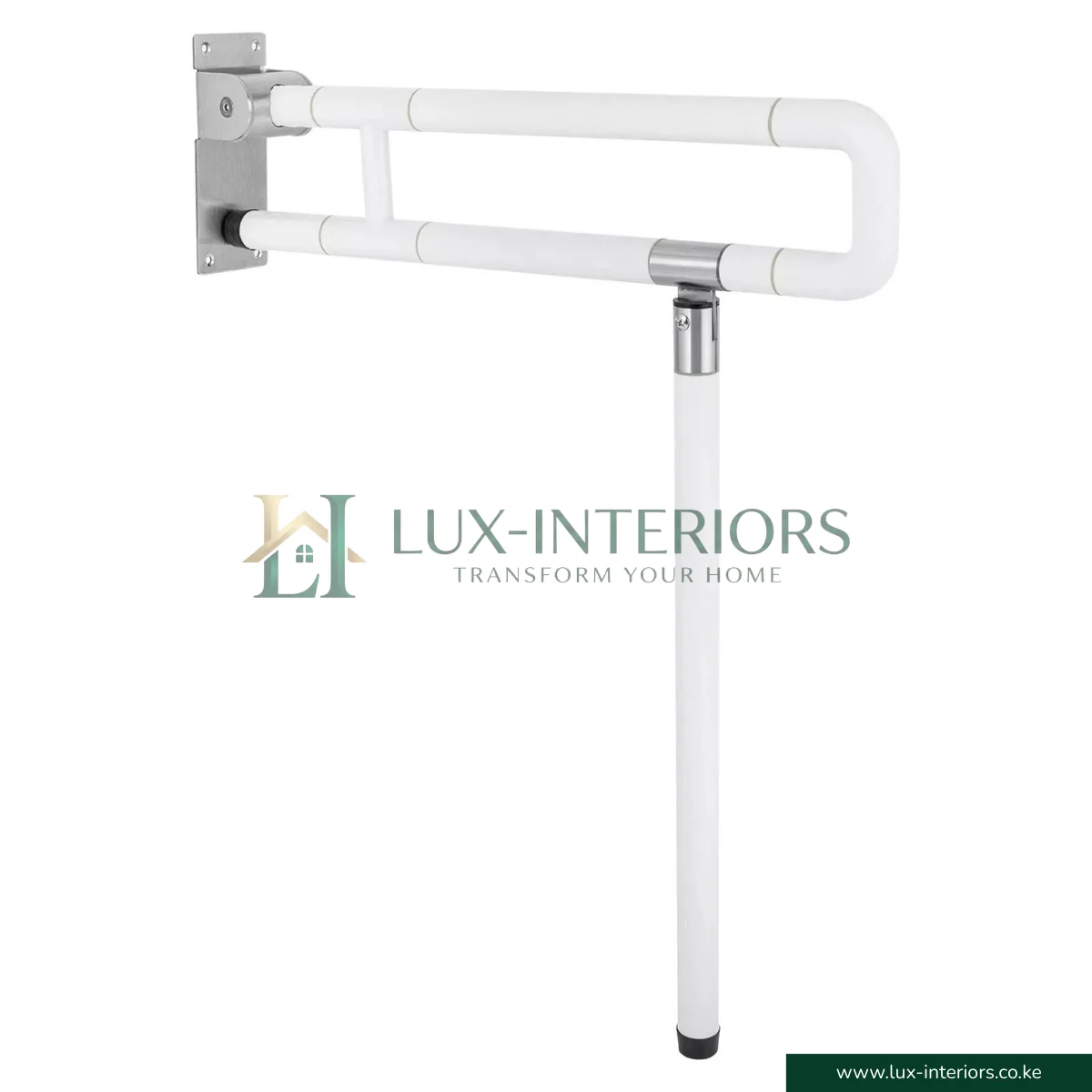
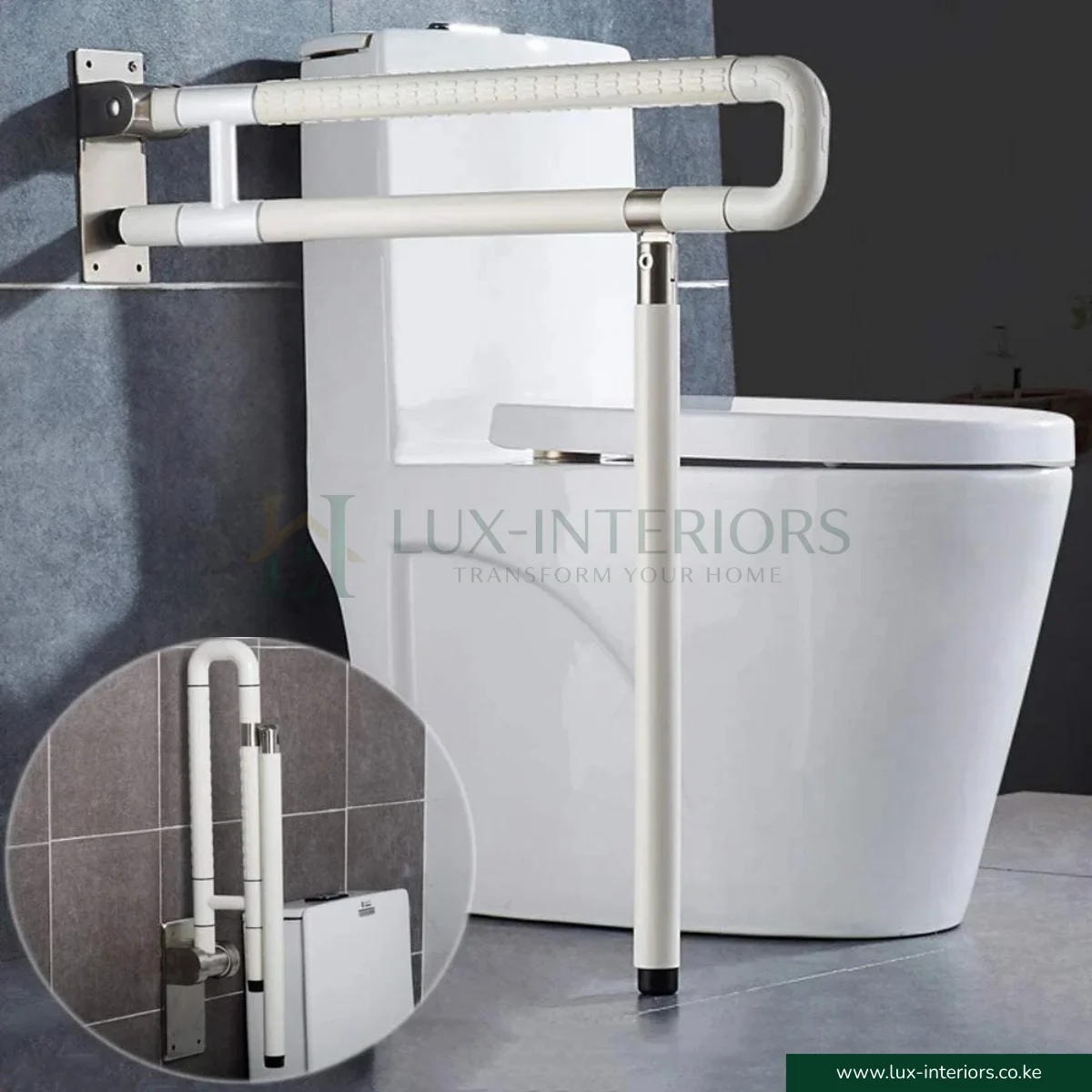
Ideal for compact powder rooms or master bathrooms in modern Nairobi apartments, these rails are mounted on the wall behind the toilet.
They can be pulled down when needed and folded back up flat against the wall when not in use. This design keeps the toilet area clear for other users and maximizes space.
L-Shaped and Angled Grab Rails
L-shaped rails provide both horizontal and vertical support in a single, continuous bar.
These are highly recommended next to toilets that are positioned adjacent to a side wall, giving the user multiple gripping points at different heights.
Material Selection: Durability Meets Elegance
When sourcing fixtures for Kenyan homes, material quality is paramount.
Many estates in Nairobi, such as Syokimau, Kitengela, and parts of Karen, rely on borehole water.
This water often has high salinity and mineral content, which can quickly corrode cheap, low-grade metals.
For grab rails, always opt for Grade 304 Stainless Steel or solid brass.
These materials resist rust, tarnishing, and the harsh chemical cleaners used to sanitize bathrooms.
If you want to move away from the traditional chrome look, consider these premium finishes:
- Matte Black: Offers a bold, contemporary contrast against light-colored ceramic tiles or local quartz walls.
- Brushed Gold or Bronze: Adds warmth and a touch of classic luxury to the space.
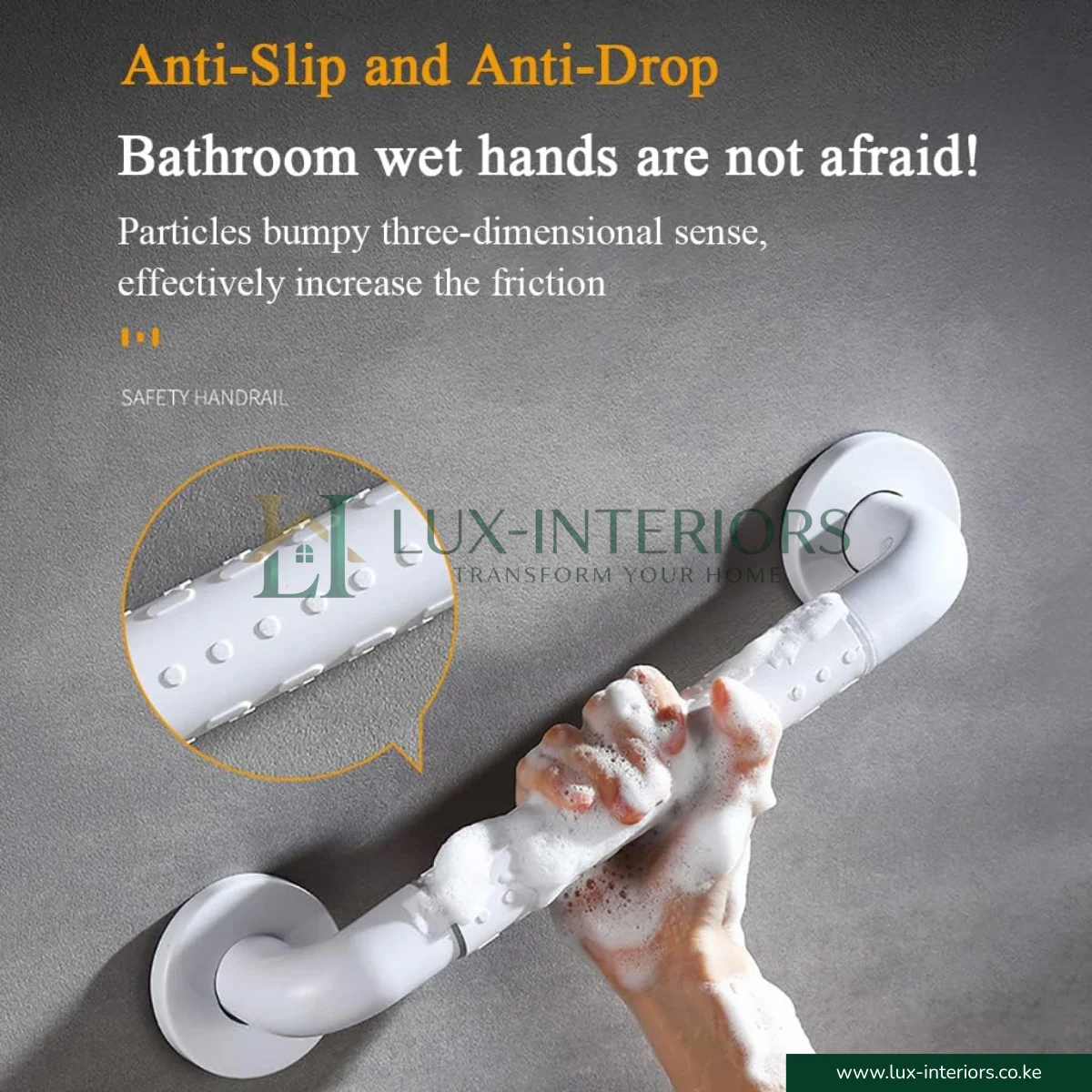
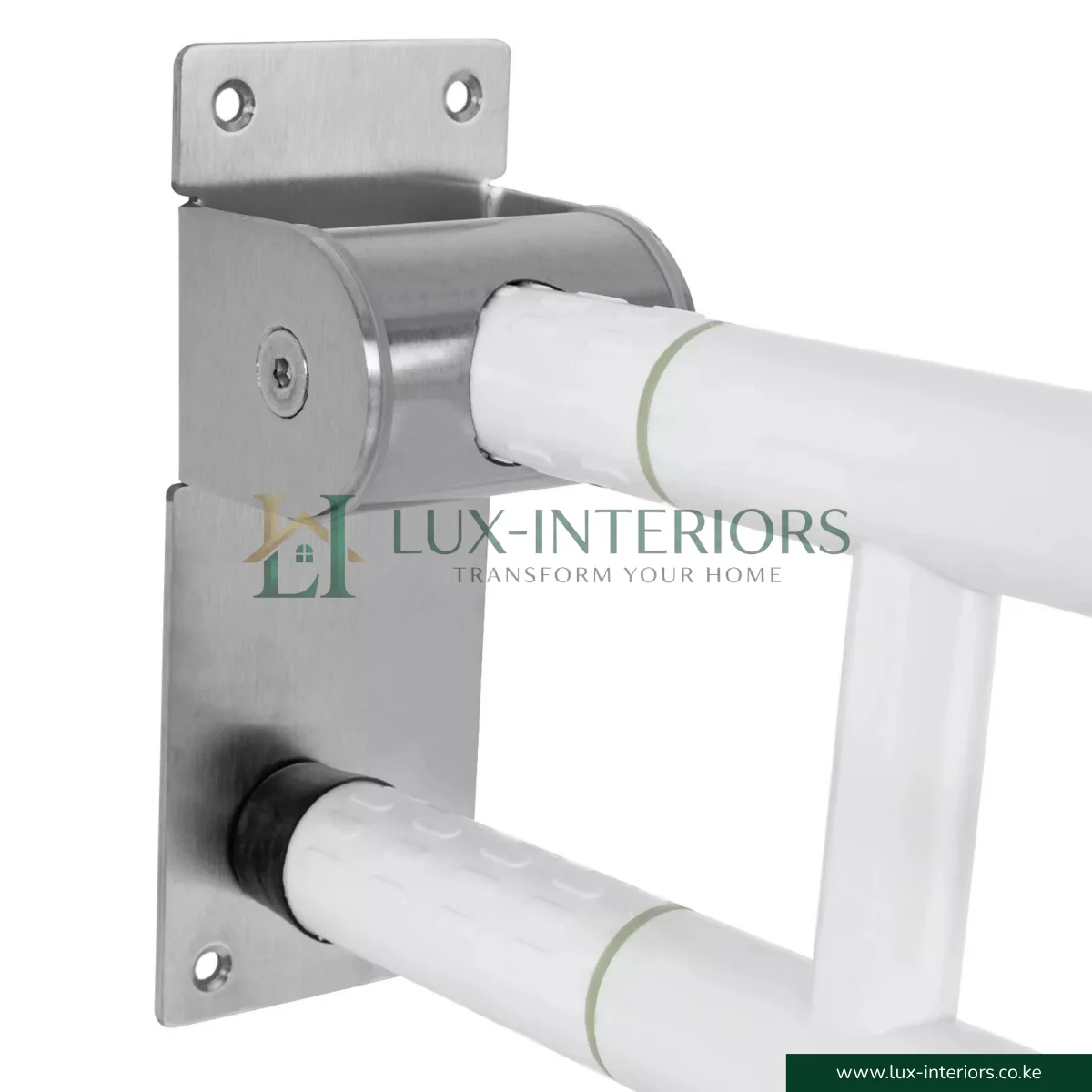
- Textured Finishes: Some high-end rails feature knurled or textured grip areas to prevent hands from slipping, even when wet.
Installation Best Practices for Kenyan Bathrooms
A grab rail is only as safe as its installation. If a rail is mounted poorly, it can pull away from the wall under weight, causing severe injury.
- Mount into Solid Structures: In Kenyan construction, walls are typically made of solid concrete blocks, natural stone, or hollow clay bricks. For hollow structures or drywall, you must locate the timber/metal studs or use heavy-duty toggle bolts. On solid concrete walls, use high-quality rawlplugs and heavy-duty stainless steel screws.
- Determine the Correct Height: Internationally accepted accessibility standards suggest mounting horizontal grab rails between 750mm and 850mm above the finished floor level. However, you can customize this height to suit the primary user’s height.
- Hire a Professional: Do not treat this as a quick DIY project. Hire an experienced plumber or installer who understands load-bearing wall fixings.
Integrating Grab Rails into Luxury Bathroom Designs
Creating an accessible bathroom does not mean you have to sacrifice your personal style. At Lux-Interiors, we believe that safety and luxury should coexist seamlessly.
Just as you would carefully select high-end Kitchen Sinks to elevate your culinary space, your bathroom fixtures should be chosen with an eye for cohesion.
You can match the finish of your grab rails to your basin taps, shower mixers, and even the trim of your shower screen.
To complete the luxury experience, combine your elegant safety rails with soft, warm lighting layers.
Avoid harsh, clinical overhead lights. Instead, pair your functional fixtures with sophisticated Ceiling Lights or ambient wall sconces to create a soothing, spa-like sanctuary.
If you have a larger bathroom layout, adding statement lighting such as low-profile Chandeliers over a freestanding tub area can draw focus upward, keeping the overall design balanced and visually stunning.
Expert Insight: Never compromise on style for safety. Opt for dual-purpose grab rails that double as elegant towel racks or toilet paper holders in a brushed gold or matte black finish. This blends utility into the architectural narrative of the bathroom, ensuring your space looks like a five-star retreat rather than an institution.
— Design Team at Lux-Interiors.
Conclusion
Disabled toilet grab rails are essential assets that bring safety, independence, and peace of mind to your home.
By choosing premium materials like Grade 304 stainless steel and selecting modern finishes that match your existing design language, you can create a bathroom that is universally accessible without losing its sophisticated edge.
Planning ahead with thoughtful details ensures your home remains a safe haven for everyone, at every stage of life.
FAQs
1. What is the weight capacity of a standard disabled grab rail?
A professionally installed, high-quality grab rail should support at least 110 to 150 kg. The ultimate weight capacity depends heavily on the strength of the wall material and the quality of the anchors used during installation.
2. Can I install a grab rail directly onto ceramic tiles?
Yes, but you must drill through the tiles carefully using a specialized glass and tile drill bit to avoid cracking them. Once through the tile, the mounting screws must anchor deeply into the solid masonry wall or timber stud behind the tile.
3. How do I prevent grab rails from rusting in coastal or borehole water areas in Kenya?
Always purchase rails made of Grade 304 (or higher) stainless steel or solid brass. Avoid chrome-plated mild steel, which rusts quickly when exposed to moisture and mineral-heavy borehole water. Regularly wipe the rails down with a soft microfiber cloth to prevent mineral buildup.
4. Are fold-up grab rails safe?
Yes, fold-up (or drop-down) grab rails are highly secure, provided they are mounted to a solid brick, concrete, or reinforced timber wall. They feature heavy-duty hinge mechanisms designed to lock securely into place when lowered.
5. How can I make a wheelchair-accessible bathroom look luxurious?
Focus on cohesive finishes. Match your grab rails with your vanity taps, flush plates, and light fixtures. Incorporate large-format porcelain tiles, curbless walk-in showers, custom storage cabinets, and soft ambient lighting to hide the clinical aspects of accessible design.
 No products in the cart.