
The best ceiling fans for Kenyan bedrooms and living rooms must balance efficient cooling with sophisticated aesthetics and integrated lighting, opting for modern DC motor fans or flush-mount chandelier designs to accommodate varied ceiling heights common in *modern home interiors* across Nairobi and Mombasa.
This immediate fusion of function and style ensures comfort without compromising the *luxury interior design* standard you are aiming for, proving that cooling solutions can enhance, rather than detract from, your overall design concept, especially during those unpredictable hot spells we experience locally.
When selecting a fan, prioritize blade span relevant to the room size and ensure the unit’s finish complements the existing *interior finishes Kenya* offers, ultimately providing long-term value and comfort tailored to our specific tropical context.
Ignoring the design implications of your cooling system is a huge mistake; it is an integral fixture that must be addressed during the initial *interior design Kenya* planning phase, not just as a last-minute addition tacked onto a finished ceiling, which almost always results in visual clutter and poor performance.
Introduction: Why the Right Ceiling Fan Matters
Think about the last time you walked into a beautifully designed home or hotel lobby here in Kenya, only to look up and see a clumsy, oversized, or visibly cheap ceiling fan that completely ruined the visual flow.
We see this all the time: clients invest heavily in gorgeous furniture and high-end floor finishes, yet they treat the ceiling fan as a necessary evil, grabbing the cheapest option available.
But the fan is a major functional and visual focal point, especially in the living room or bedroom where we spend most of our time looking up.
Choosing the right fan is not just about moving air; it is about energy efficiency, noise reduction, and enhancing your overall design narrative, ensuring your comfort fixtures actively contribute to the ambiance instead of distracting from it.
When you partner with a professional design firm like Lux-Interiors, we integrate cooling from the concept stage, treating the fan as essential architecture rather than an afterthought appliance.
Key Factors to Consider When Choosing a Ceiling Fan
Selecting a ceiling fan in Kenya involves more than just finding one that spins; you must consider the local environmental factors and architectural realities, especially dust and fluctuating power.
Many new apartment blocks in Nairobi have standard or slightly lower ceiling heights, meaning those traditional long-drop fans are unsafe or impractical, demanding sleek, flush-mount designs.
Moreover, the efficiency of the motor is critical because high electricity costs mean you need a fan that delivers maximum air circulation for minimum power consumption.
Durability is also a non-negotiable factor; a fan must withstand the occasional voltage surge and the relentless Kenyan dust, requiring high-quality, easily cleanable materials and robust internal components designed for longevity.
Blade Span vs. Room Size
The biggest practical mistake we see in many Kenyan homes is installing a fan that is too small for the living room or too large for the bedroom, leading to inefficient cooling or, conversely, wind tunnel effects.
For standard Kenyan bedrooms (typically 10×12 ft or 12×12 ft), a fan with a blade span between 44 and 52 inches usually suffices, focusing on quiet operation.
However, a large open-plan living room often requires a 60-inch span or even multiple fans strategically placed to cover the full area adequately.
Space planning is crucial here; we determine the optimal size and placement during the initial design phase to ensure that the fan maximizes air delivery without interfering with other installed *premium lighting fixtures* or the structural beams of the building.
Motor Type and Efficiency
When budgeting for your home, always prioritize fans with DC (Direct Current) motors over traditional AC motors—this is particularly relevant given current utility costs in Kenya.
DC motors are up to 70% more energy efficient than AC models, meaning they significantly reduce your long-term operating costs, which is a massive win for residential and commercial property owners alike.
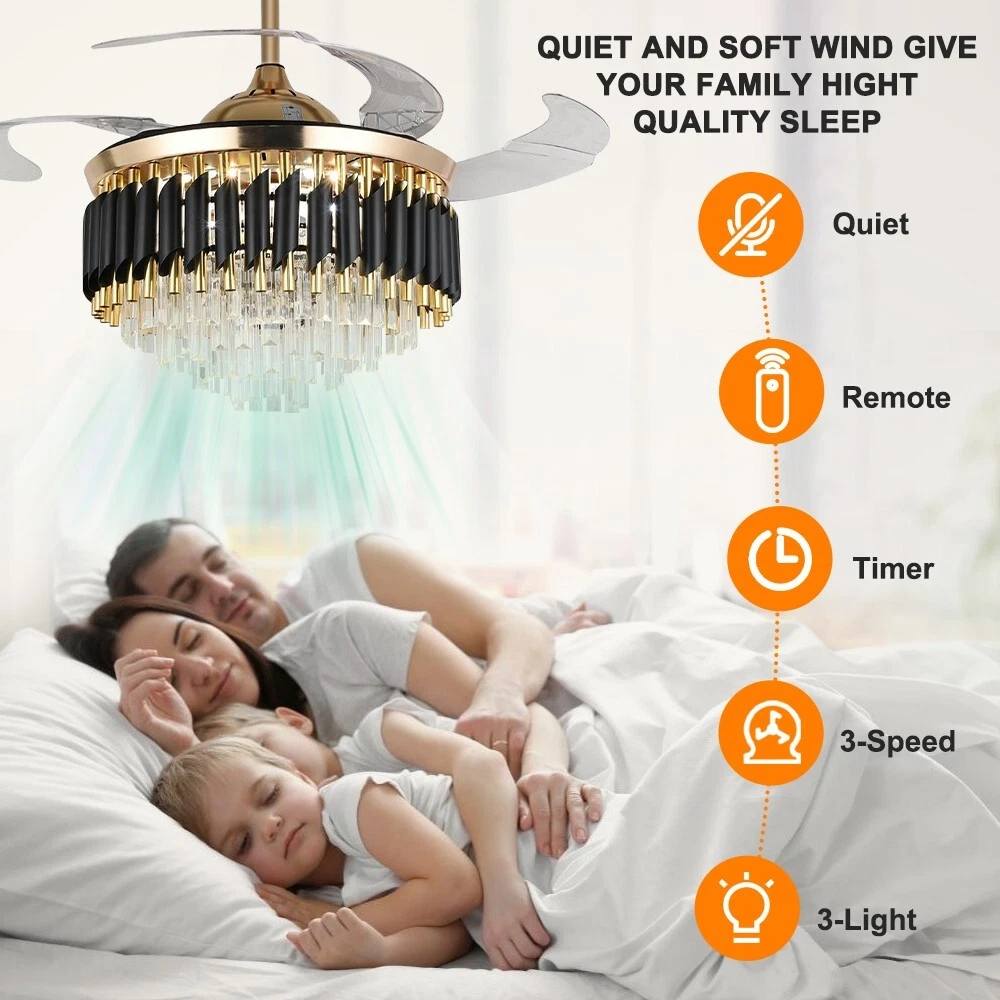
Beyond the cost savings, DC motors are almost silent, making them perfect for bedrooms, and they typically offer more speed settings and greater control, often integrated seamlessly with remote operation systems.
While the initial investment for a DC fan might be slightly higher, its superior performance, reduced energy consumption, and longevity make it a fundamental part of a genuinely efficient and comfortable *modern home interiors* setup.
Aesthetics and Interior Style
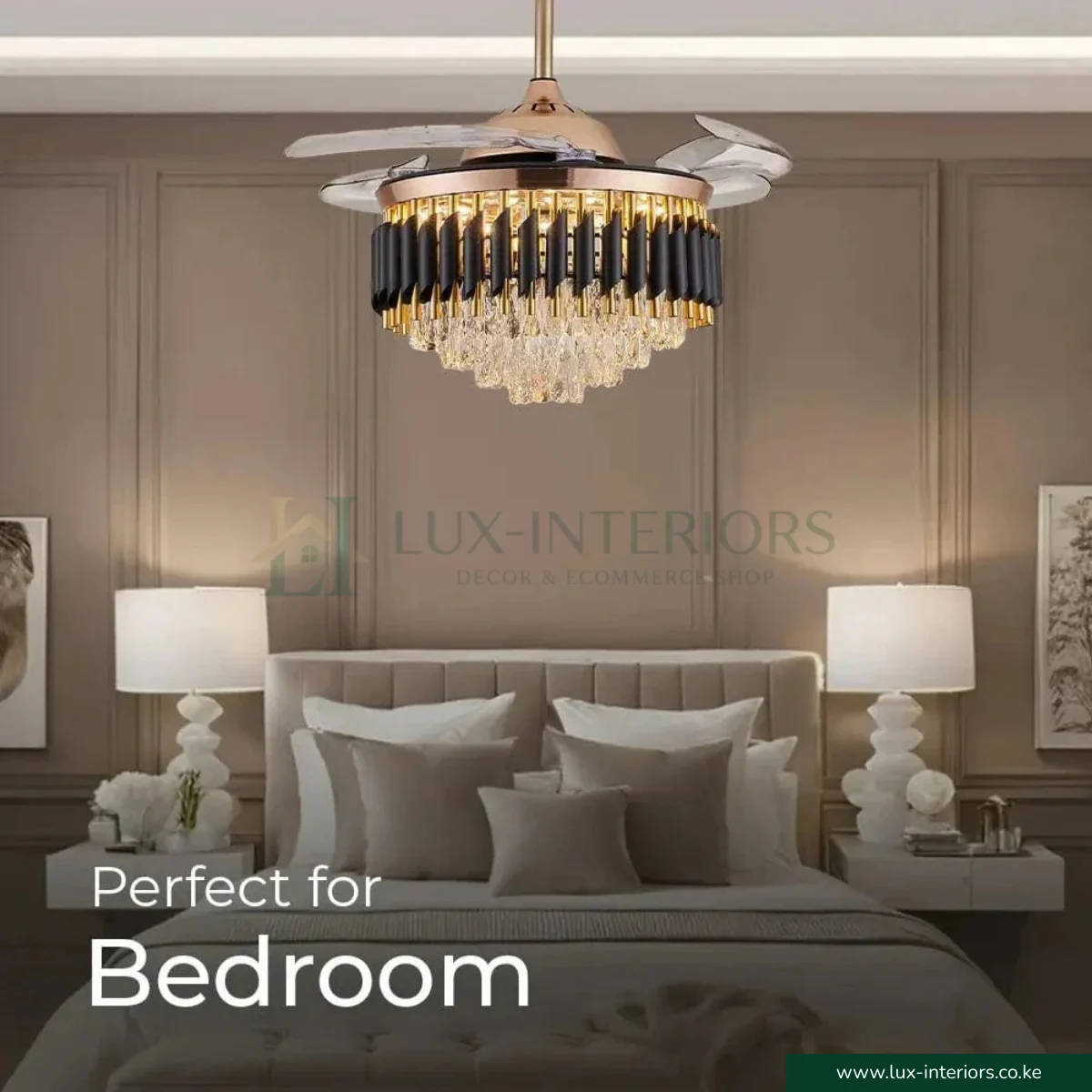
A ceiling fan is fundamentally a piece of hardware, but in the context of *luxury interior design*, it must be elevated to a deliberate design element.
If your living room features contemporary, minimalist aesthetics, you want a fan with sleek, hidden blades and perhaps a light integrated into a smooth, architectural enclosure.
Conversely, a coastal property in Mombasa might benefit from a fan with natural wood or woven texture blades that complement the airy, relaxed vibe.
The finish of the fan—whether matte black, brushed chrome, or polished brass—must coordinate perfectly with your door hardware, curtain rods, and other *interior finishes Kenya* fittings, ensuring a cohesive and polished look from every angle.
Top Ceiling Fan Types for Bedrooms
Bedrooms demand quiet sophistication; the fan’s primary function here is unobtrusive cooling that supports restful sleep, meaning silence is golden.
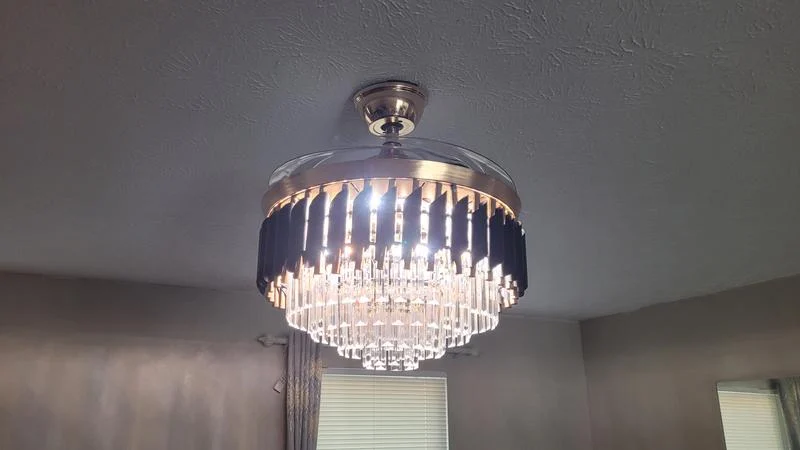
We highly recommend fans that integrate the light source discreetly, often using LED panels or fixtures that resemble flush-mount chandeliers rather than traditional downward-hanging fan lights.
Opting for models with remote controls is essential, allowing you to adjust settings without getting out of bed, which is a small luxury that makes a huge difference in daily comfort.
Look specifically for models advertised as “silent DC motor fans” because even a slight hum can disrupt the peace and undermine the relaxation that a premium bedroom design aims to achieve.
We see many clients in apartments with standardized low ceilings who worry that a powerful fan will look clumsy or require awkward dropping.
This is precisely why we strongly recommend the latest generation of integrated flush-mount fans that blend seamlessly into your ceiling structure.
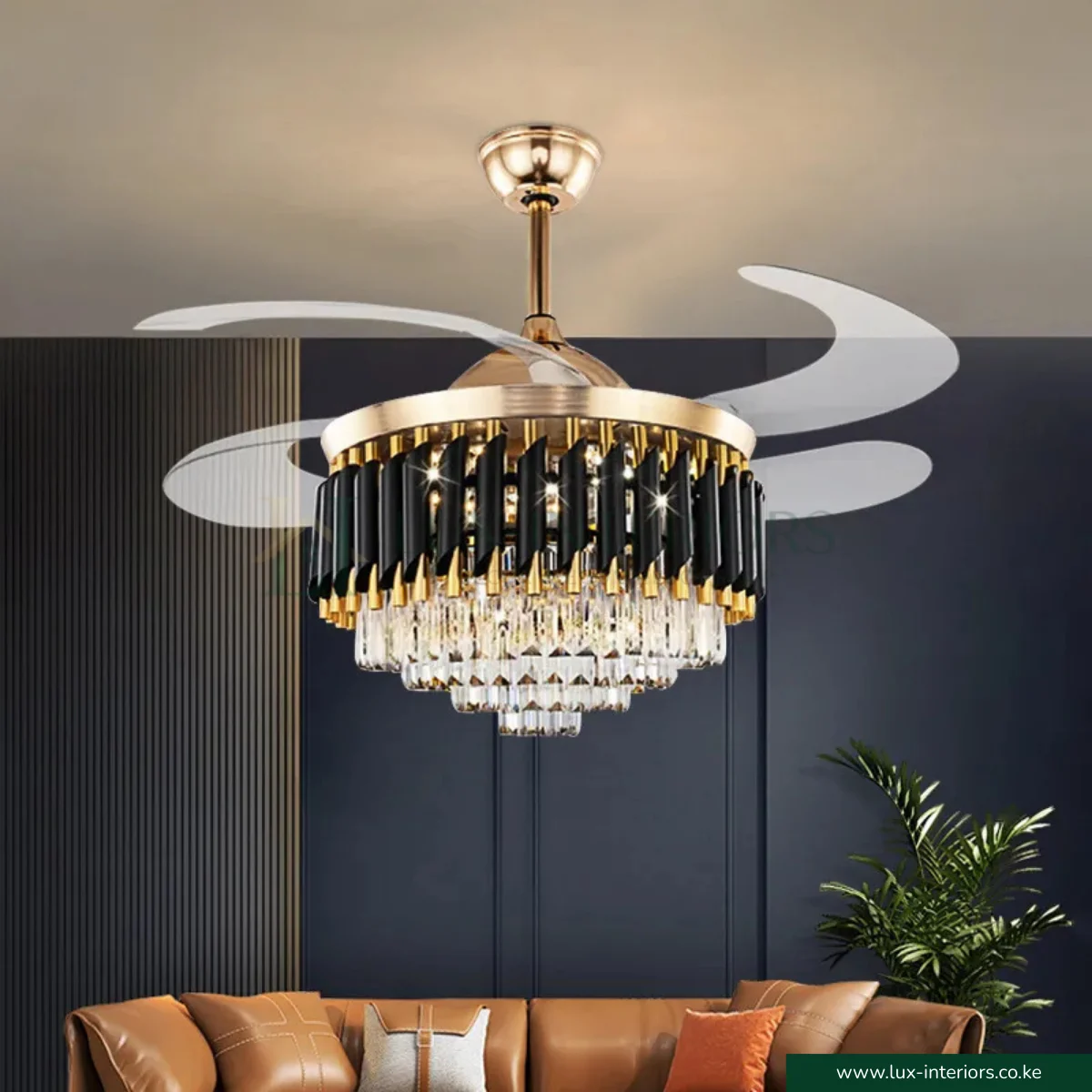
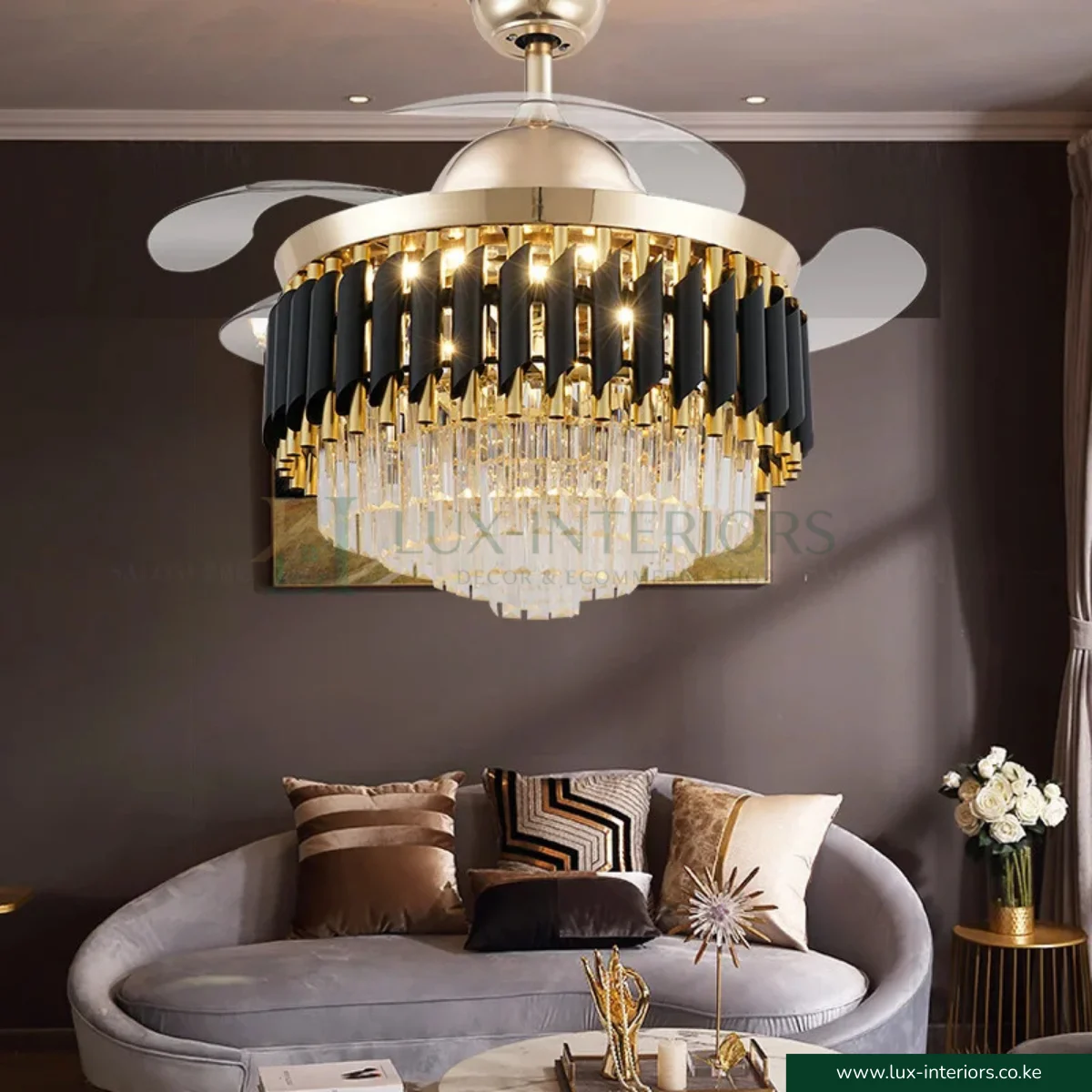
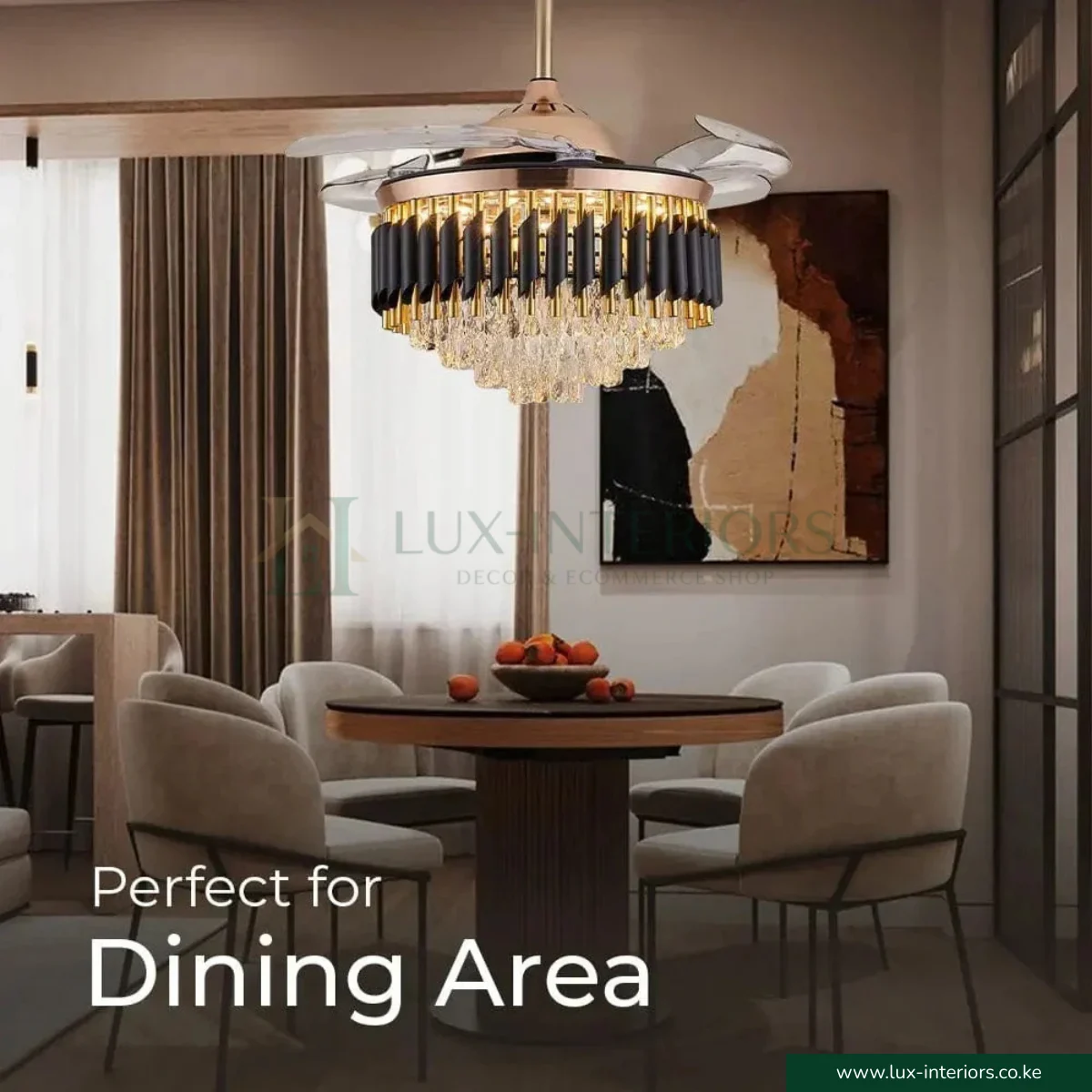
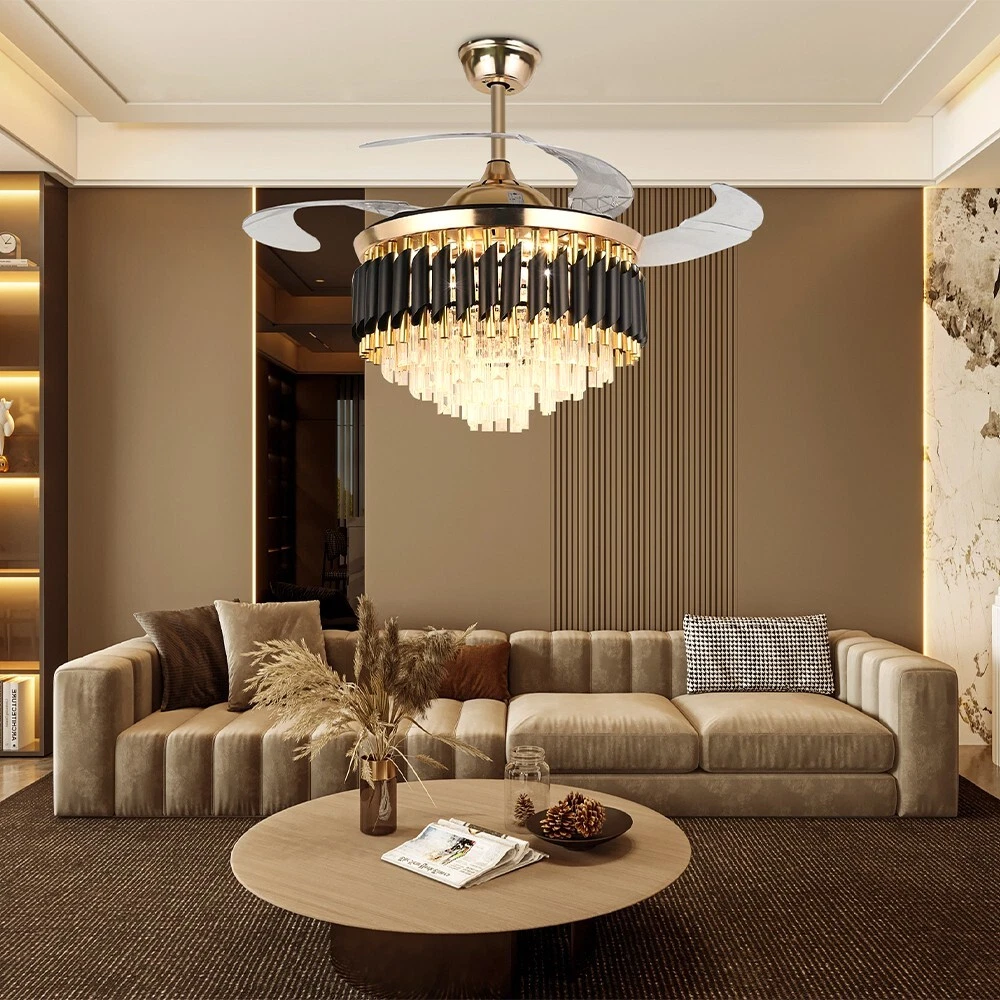
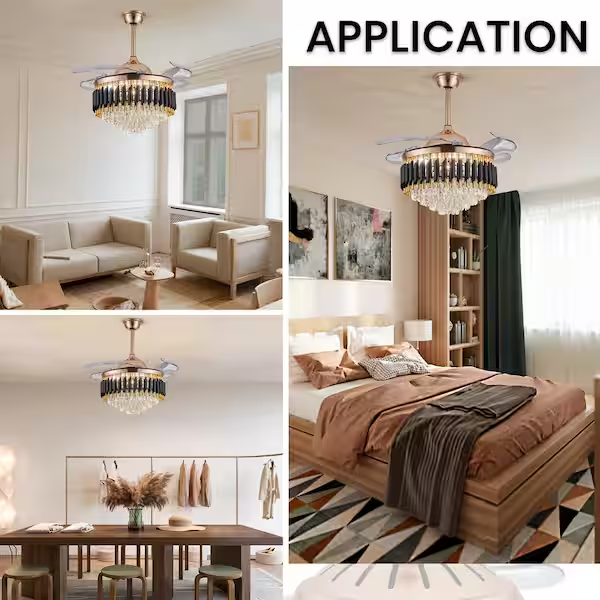
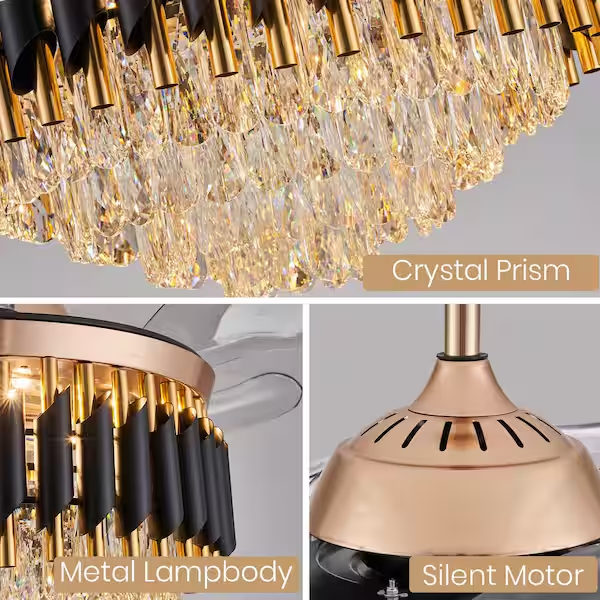
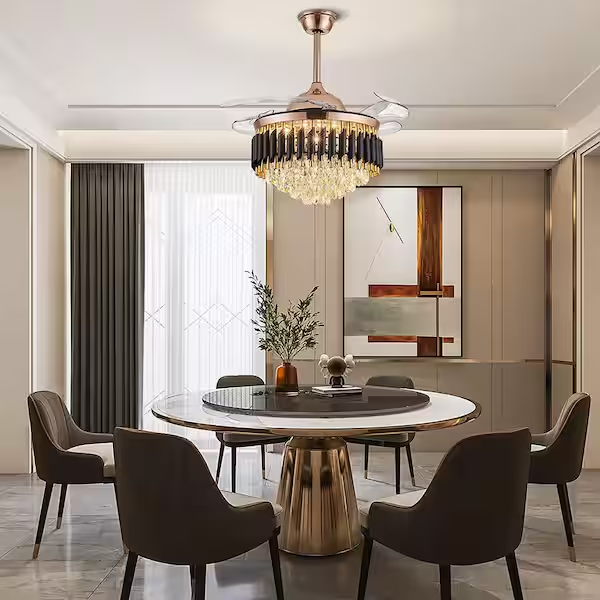
Take, for instance, the stunning Ceiling Fan with Light – Flush Mount Chandelier Design with Remote Control we offer, which solves the cooling problem while serving as a contemporary statement piece.
This fixture is the perfect fusion of ambient lighting and quiet, efficient airflow, crucial for peaceful sleep and maintaining the *luxury interior design* aesthetic in your primary retreat.
It operates silently via remote control, ensuring that you never have to sacrifice style or comfort, a necessity in the increasingly warm Kenyan climate, and represents a smart investment at KSh 27,000, ensuring immediate comfort and long-term visual appeal.
You can view the product details and purchase it directly here: https://lux-interiors.co.ke/product/flush-mount-ceiling-fan-with-chandelier-light-and-remote/
Top Ceiling Fan Types for Living Rooms
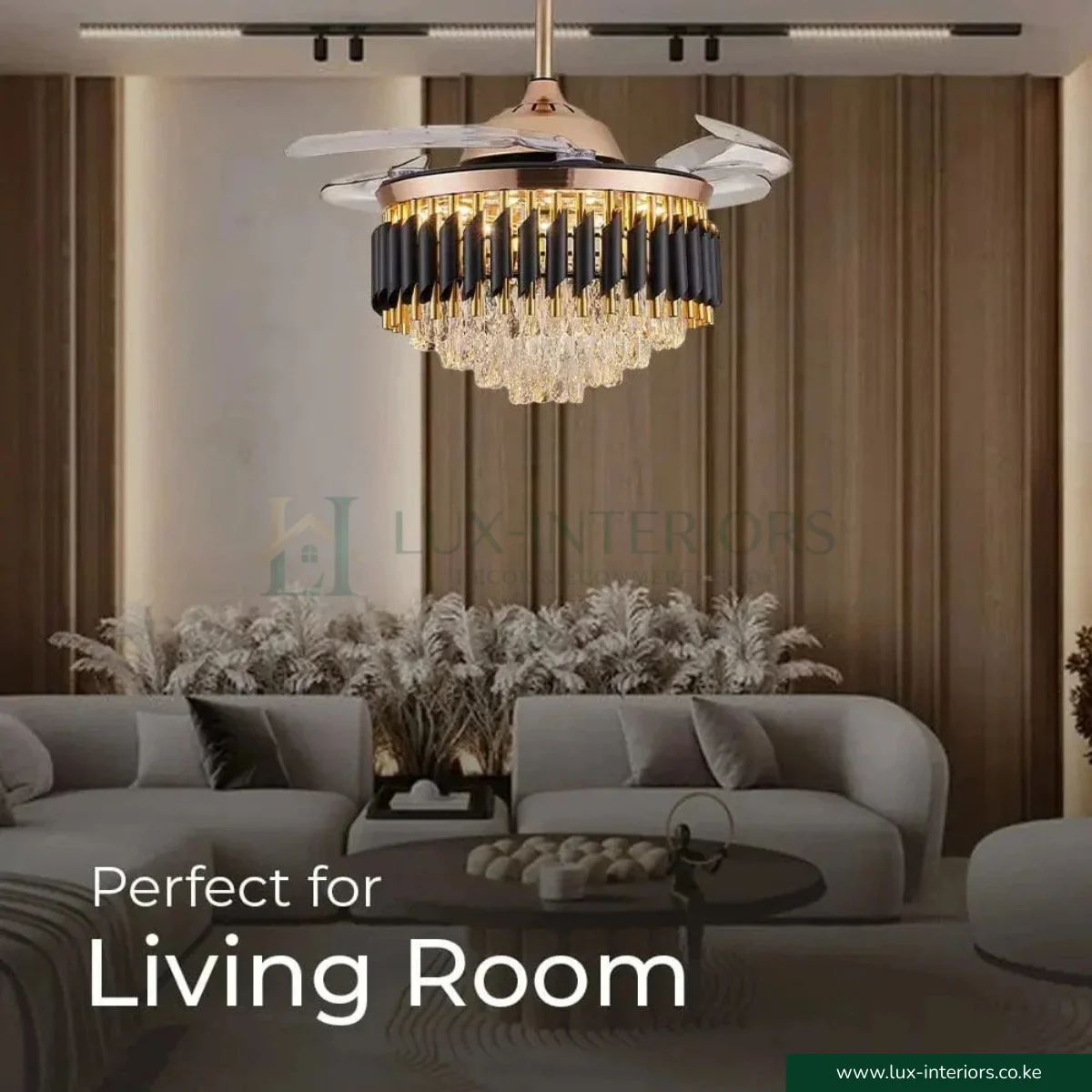
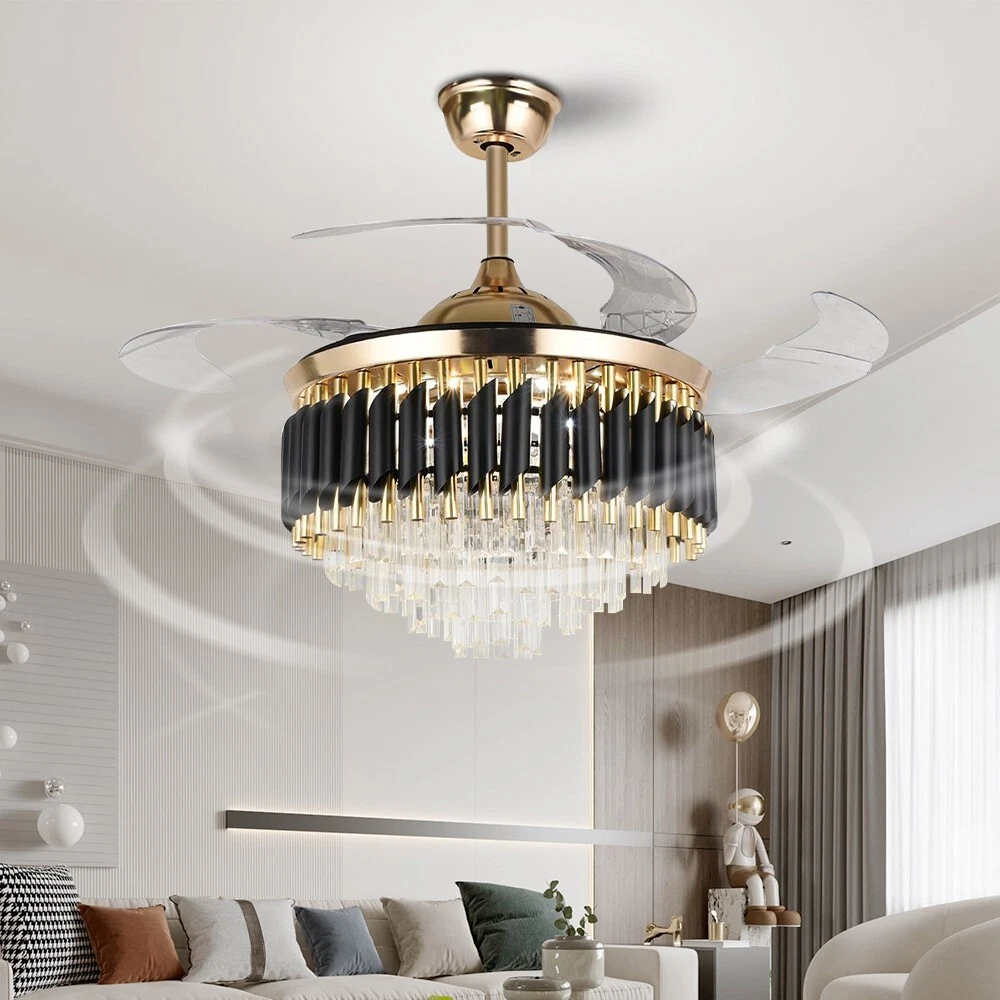
The living room fan often serves as a statement piece, requiring both high airflow and strong visual impact, especially in high-ceilinged spaces common in stand-alone homes in areas like Karen or Runda.
Here, you have the flexibility to choose larger diameter fans, sometimes incorporating architectural designs like multiple blade sets or unique finishes that act almost like kinetic sculptures.
When dealing with double-volume ceilings, we use downrods to bring the fan down to an optimal height (around 8 to 10 feet above the floor), ensuring the air flow actually reaches the seating area efficiently, rather than just circulating stale air high up near the roofline.
Remember, in a living space, the fan must complement the scale of the room; a tiny fan in a vast room looks instantly cheap and ineffective.
Integrating Ceiling Fans with Lighting: Chandelier & Ambient Solutions
If I could give one piece of advice on *lighting design Kenya*, it would be this: never let your electrician or builder decide your lighting layout without an expert plan.
A ceiling fan, particularly one with an integrated light, fundamentally changes the lighting strategy for the entire room because it occupies the critical center point usually reserved for a pendant or chandelier.
A successful interior, especially in a living room, relies on layered *lighting design Kenya* that includes ambient, task, and accent lighting, and relying solely on the often harsh, downward light from a fan fixture is a beginner’s mistake that creates flat, uninviting spaces.
The Importance of Layered Lighting
When we design a space at Lux-Interiors, we treat the fan light only as supplementary ambient light, never the primary source.
If you select a fan with a built-in light, you must ensure you compensate with other lighting layers, such as recessed spotlights around the perimeter, floor lamps for task lighting, and picture lights for accent.
This layering prevents the room from feeling flat and allows you to control the mood and functionality depending on the time of day or activity.
Our expertise in *premium lighting fixtures* means we coordinate the color temperature (warmth) of the fan light precisely with all the other lights in the room, creating a seamless, cohesive, and professional feel that cheap installations simply cannot match.
Avoiding the Single Point of Light Mistake
The single point of light, usually placed dead center in the room, is the hallmark of rushed or unskilled design prevalent in many Kenyan renovations.
If your ceiling fan occupies this central spot, its lighting capability should be viewed as a soft fill rather than the main event.
We use professional space planning to map out the fan placement first, then design the surrounding architectural lighting, ensuring the light sources are distributed evenly and focused where they are needed most.
By prioritizing this holistic approach, we ensure that your ceiling design is clean, functional, and visually balanced, avoiding the cluttered look that occurs when fixtures are added piecemeal without a master plan.
Understanding Ceiling Fan Prices in Kenya
The local market offers a vast range of fan prices, from KSh 5,000 imports found in mass-market hardware shops to sophisticated, architecturally designed fans costing upwards of KSh 50,000.
It is tempting to source cheap, unbranded fans from general hardware stores to save a few thousand shillings, but I promise you, that short-term saving quickly translates into long-term noise, poor performance, and eventual replacement—a cycle of frustration many Kenyan homeowners know too well.
Instead of treating your interior fittings as disposable hardware, view them as permanent assets that enhance your quality of life and property value.
If you are tired of noisy fans that wobble or unreliable fixtures that compromise your carefully planned space, stop wasting money on quick fixes and let us guide your selection. Contact Lux-Interiors today for a consultation on selecting durable, aesthetically superior fittings that guarantee both performance and lasting beauty, ensuring your cooling solutions are engineered for our local conditions, providing peace of mind and enduring quality.
The difference in price almost always reflects the quality of the motor, the durability of the blade material (which should resist warping in our humid/dry climate cycles), and the integration of advanced features like DC motors, remote controls, and high-quality integrated LED lighting.
Investing in *premium lighting fixtures* and fans from reputable brands ensures you get components built to international standards, which translates to a longer lifespan and quieter operation—essential components of genuine *luxury interior design*.
We strictly curate our product lines at Lux-Interiors, ensuring that every fan we recommend meets rigorous quality standards tested against the realities of Kenyan living, protecting your investment and guaranteeing performance for years to come.
How Lux-Interiors Enhances Your Fan Selection and Installation
Working with a design partner like Lux-Interiors means your fan selection is not just an isolated purchase; it is a meticulously planned component of your entire build or renovation project.
We start with professional space planning, where we determine the exact required airflow and placement before any electrical points are installed, saving you from expensive rerouting later.
Because we also supply your premium kitchen sinks, designer taps, door locks, and high-end sockets and switches, we ensure absolute consistency across all your *interior finishes Kenya* fittings, guaranteeing that the metal finish of your fan matches the finish of your light switches and door handles.
This holistic approach is the secret ingredient that elevates a house full of expensive things into a truly cohesive and professionally designed home, reflecting our commitment to seamless execution from concept to final installation.
Maintenance Tips for Longevity and Performance
The biggest enemy of a ceiling fan in Kenya, particularly in dusty urban environments or coastal regions, is neglect.
To ensure your fan, particularly those high-quality *premium lighting fixtures* you invested in, maintains its performance and aesthetics, regular maintenance is mandatory.
First, clean the blades and motor housing frequently to prevent dust buildup, which can cause the motor to strain and increase power consumption or noise.
Secondly, in areas prone to voltage instability, consider installing surge protectors to safeguard the delicate electronics of DC motors and remote control receivers, protecting your KSh 27,000 investment.
Never use harsh chemical cleaners that could strip the finish; a simple damp cloth is usually sufficient for maintaining the polished look of your chosen *modern home interiors* hardware.
Conclusion
The ceiling fan should be viewed as a critical piece of architectural hardware, not merely an appliance, deserving the same thoughtful consideration as your finest furniture and premium kitchen fittings.
By approaching fan selection with a focus on holistic design, prioritizing silent DC motors, matching aesthetics to your *luxury interior design* scheme, and integrating it seamlessly into a layered *lighting design Kenya* plan, you ensure both comfort and enduring style.
Lux-Interiors stands as your trusted partner, providing expert guidance, sophisticated design planning, and access to premium, durable products designed specifically to meet the high standards and practical challenges of the Kenyan market.
Stop compromising on cooling and lighting; elevate your space by choosing thoughtful design and exceptional quality today.
FAQs
- Is professional interior design worth the cost in Kenya?
Yes, professional interior design saves money long-term by preventing costly mistakes, ensuring optimal space planning, and maximizing the value of your chosen *interior finishes Kenya*. - Should I install separate lights if my fan has an integrated light fixture?
Absolutely; the integrated fan light should be treated as supplementary ambient light, and you must layer other lighting (task/accent) to create a functional and balanced room. - Why are premium sockets and switches important for modern home interiors?
Premium sockets and switches from brands like Lux-Interiors offer superior durability, better safety features against local power fluctuations, and aesthetic coherence with high-end door locks and *premium lighting fixtures*. - How long does a typical full-home interior design project take in Kenya?
A full interior design project, from concept and procurement to installation, typically takes between 3 to 6 months, depending on the scope and the availability of specialized *interior finishes Kenya* materials. - What is the main benefit of working with one design partner like Lux-Interiors for all fittings?
Working with a single trusted partner ensures absolute consistency in design language, quality control across all hardware (fans, taps, locks), and streamlined project management, preventing coordination errors and budget overruns.



 No products in the cart.