
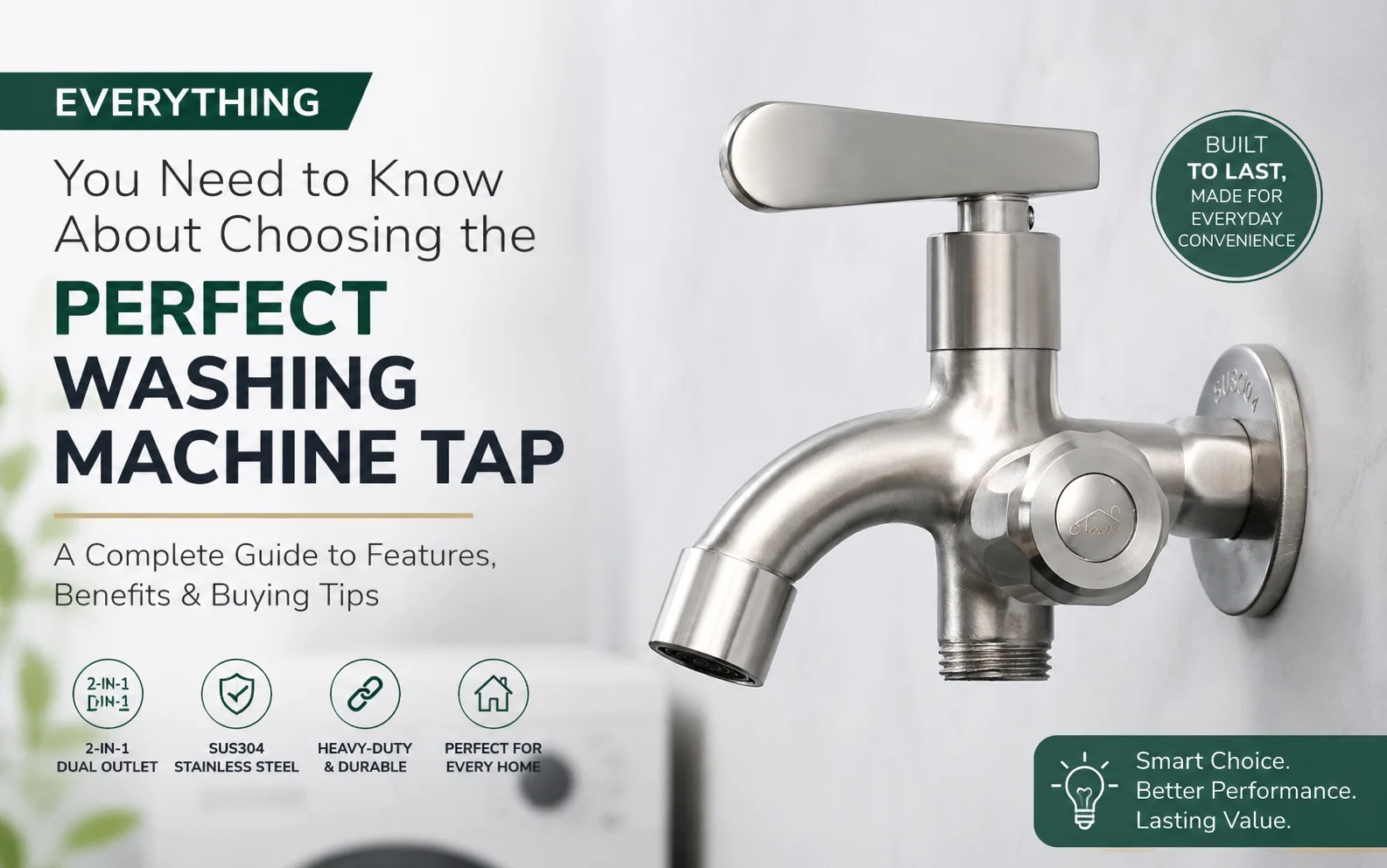
Introduction: The Unsung Hero of Your Laundry Day
Have you ever stopped to think about the one tiny component that stands between a successful load of laundry and a flooded kitchen or utility room?
Most of us take the washing machine tap for granted until it starts dripping, or worse, sprays water across the floor like a broken fire hydrant. It’s the silent worker of the household.
While we obsess over the latest front-loading technology or the smartest detergents, the humble tap is what actually fuels the whole operation.
In Kenya, where home designs are evolving into more modern, open-plan spaces, the “utility area” is no longer just a dark corner.
Whether your machine sits in a dedicated laundry room or is tucked under a sleek counter in a kitchen designed by Lux-Interiors, the hardware you choose matters.
In this guide, we’re going to dive deep into the world of washing machine taps—from the types available to how you can ensure yours never lets you down.
What Exactly is a Washing Machine Tap?
At its simplest, a washing machine tap is a specialized valve designed to control the flow of water into your appliance.
Unlike the tap you use to wash your hands, these are built to withstand constant pressure.
Most modern washing machines are connected to these taps 24/7, meaning the seal has to be incredibly robust.
How It Differs from Your Average Kitchen Tap
You might be wondering, “Can’t I just use a regular tap?” Well, not exactly.
A standard kitchen tap is designed for frequent manual use—turning it on and off to rinse a plate.
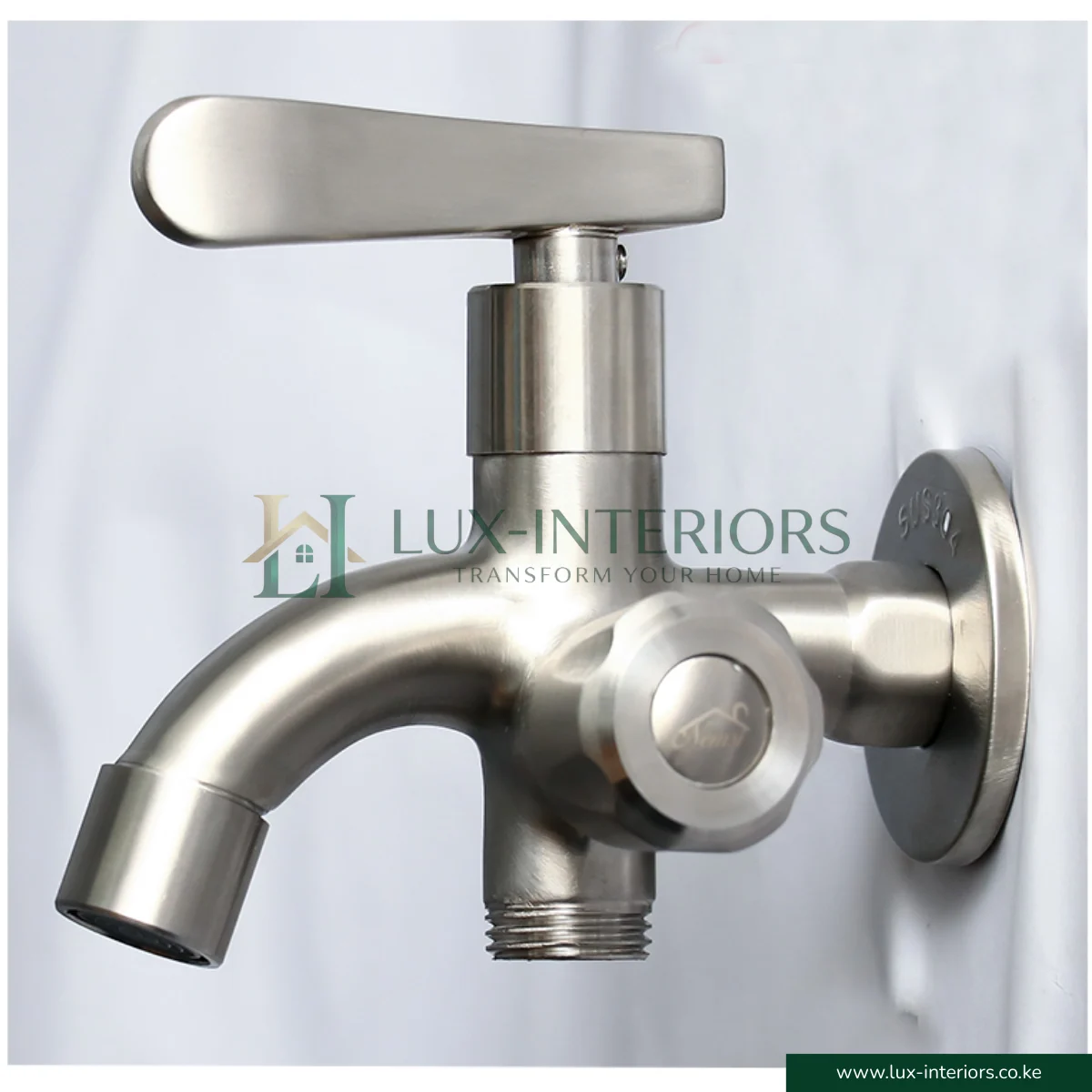
A washing machine tap, however, often features a threaded nozzle specifically designed to screw onto a washing machine inlet hose.
This creates a watertight, high-pressure seal that a regular spout just can’t provide. It’s like the difference between a garden hose and a showerhead; they both move water, but they do it very differently.
Common Types of Washing Machine Taps in Kenya
When you walk into a hardware store or browse our shop, you’ll notice a few different styles. Choosing the right one depends on your plumbing setup and how much space you have.
Standard Bib Taps: The Reliable Classic
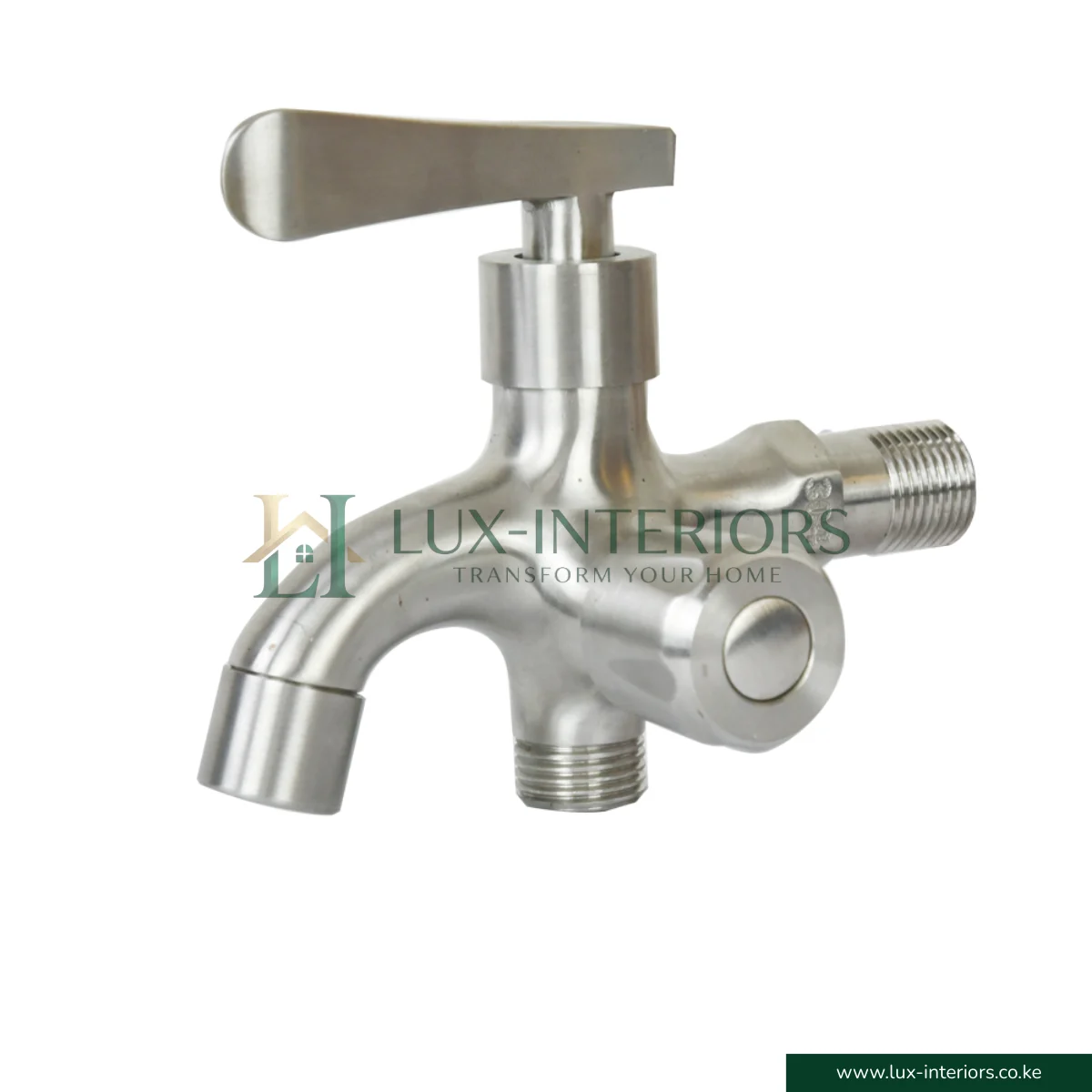
The Bib tap is the most common variety. It sticks out from the wall, usually has a lever or a cross-handle, and features a threaded end. It’s the “Old Faithful” of the plumbing world. They are easy to replace and very affordable. If your laundry setup is in an outdoor “dhobi” area or a garage, this is likely what you have.
Double-Outlet Taps: Double the Convenience
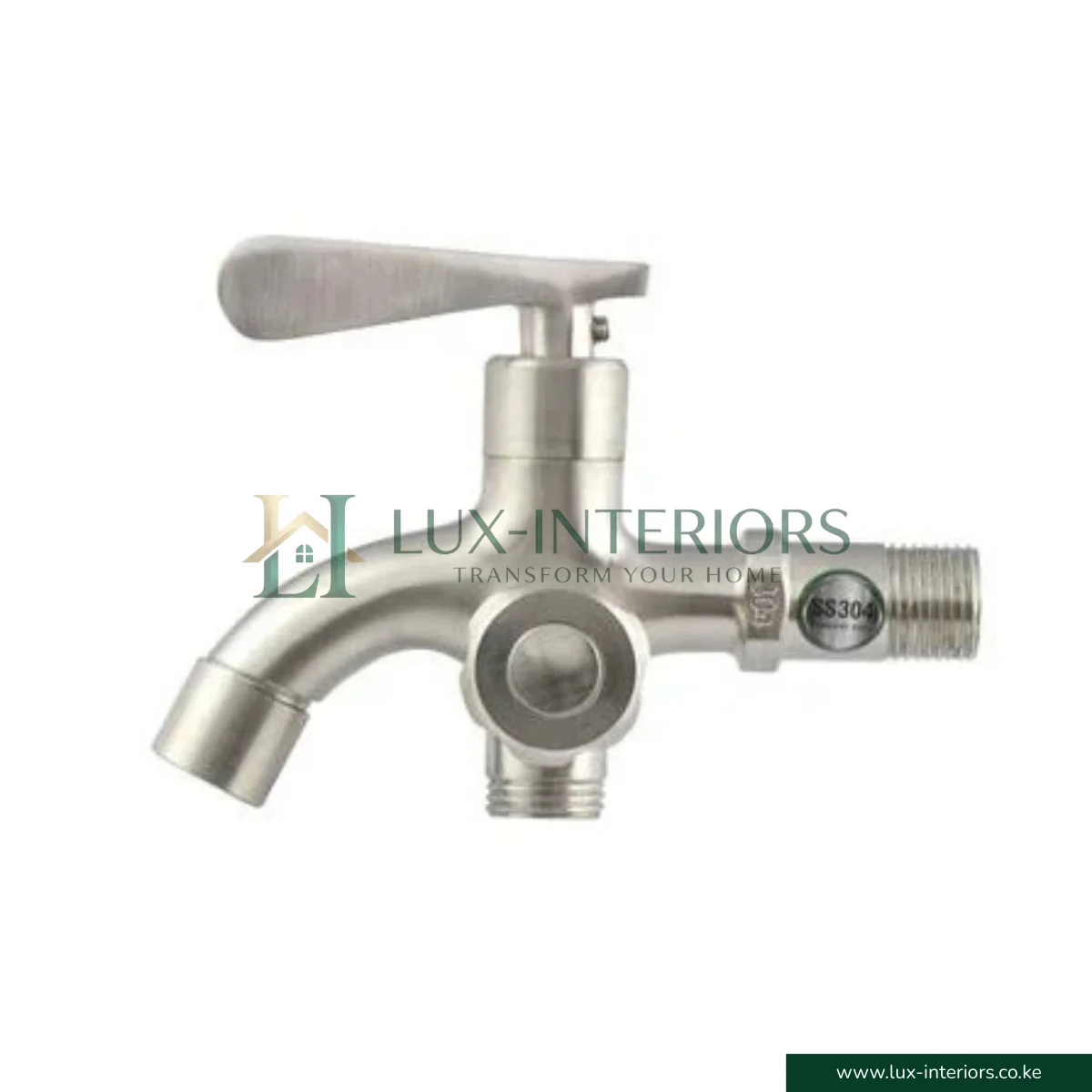
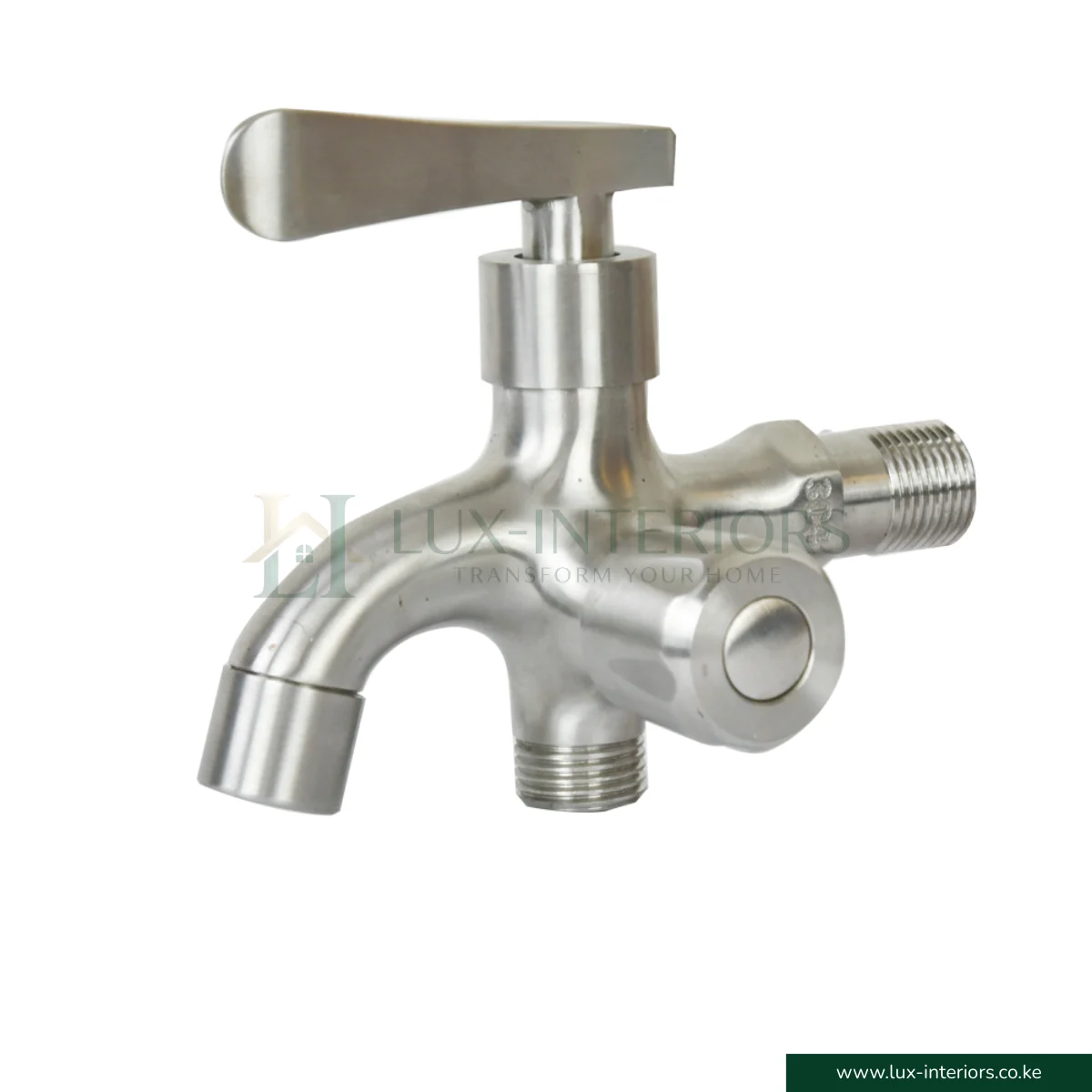
Ever wanted to run your washing machine and still have a tap free to fill a bucket? That’s where the double-outlet tap comes in. One outlet stays permanently connected to the machine, while the other serves as a regular spout. It’s a lifesaver in smaller Kenyan apartments where space is at a premium and every water source needs to multi-task.
Concealed Wall Taps: For the Minimalist Look
If you are working with Lux-Interiors on a high-end kitchen redesign, you probably don’t want ugly pipes and bulky taps sticking out. Concealed taps are built into the wall, with only the handle and the connection point visible. It’s sleek, modern, and keeps your utility space looking as polished as your living room.
Material Matters: Durability vs. Aesthetics
Not all taps are created equal. You might find a cheap plastic version, but in the world of plumbing, “cheap” often leads to “expensive” later on when your floorboards are warped from a leak.
Why Brass is King of the Laundry Room
Most experts agree that solid brass is the way to go. Why? Because brass is incredibly resistant to corrosion. Water in many parts of Kenya can be “hard,” containing minerals that eat away at inferior metals.
A chrome-plated brass tap gives you the best of both worlds: the internal strength of brass and the shiny, easy-to-clean finish of chrome.
Common Problems: Why Is My Tap Leaking?
There is nothing more annoying than that “drip… drip… drip…” in the middle of the night.
Usually, a leaking washing machine tap is caused by one of two things: a worn-out internal washer or a loose connection to the hose.
Over time, the constant pressure from the water main flattens the rubber seal inside the tap.
Luckily, this is a quick fix that doesn’t always require calling in a plumber—though if you’re unsure, it’s always better to be safe!
Step-by-Step Installation Guide (DIY Style)
Ready to channel your inner handyman? Installing a new tap is actually quite satisfying.
Tools You’ll Need Before You Start
- A new washing machine tap (Check our shop for quality options).
- An adjustable wrench.
- Thread seal tape (PTFE tape).
- A bucket (to catch the “oops” water).
Step 1: Turn off the water! This is the most important step. Find your main shut-off valve and close it.
Step 2: Drain the lines. Open the lowest tap in the house to get the remaining water out.
Step 3: Unscrew the old tap. Use your wrench to turn it counter-clockwise.
Step 4: Prep the new tap. Wrap the PTFE tape around the threads of the new tap about 5 or 6 times in a clockwise direction.
Step 5: Screw it in. Hand-tighten it first, then give it a final snug turn with the wrench.
Step 6: Reconnect and test. Connect your hose, turn the water back on, and watch for any leaks.
The Connection Between Utility and Design
At Lux-Interiors, we believe that every inch of your home should reflect your style.
Why should your laundry area look like an afterthought? We often see homeowners spend a fortune on ceiling lights and chandeliers but settle for the cheapest, ugliest taps in the kitchen and laundry.
Why Your Kitchen Sinks and Taps Deserve an Upgrade Too
If your washing machine is located in the kitchen, the visual flow is vital.
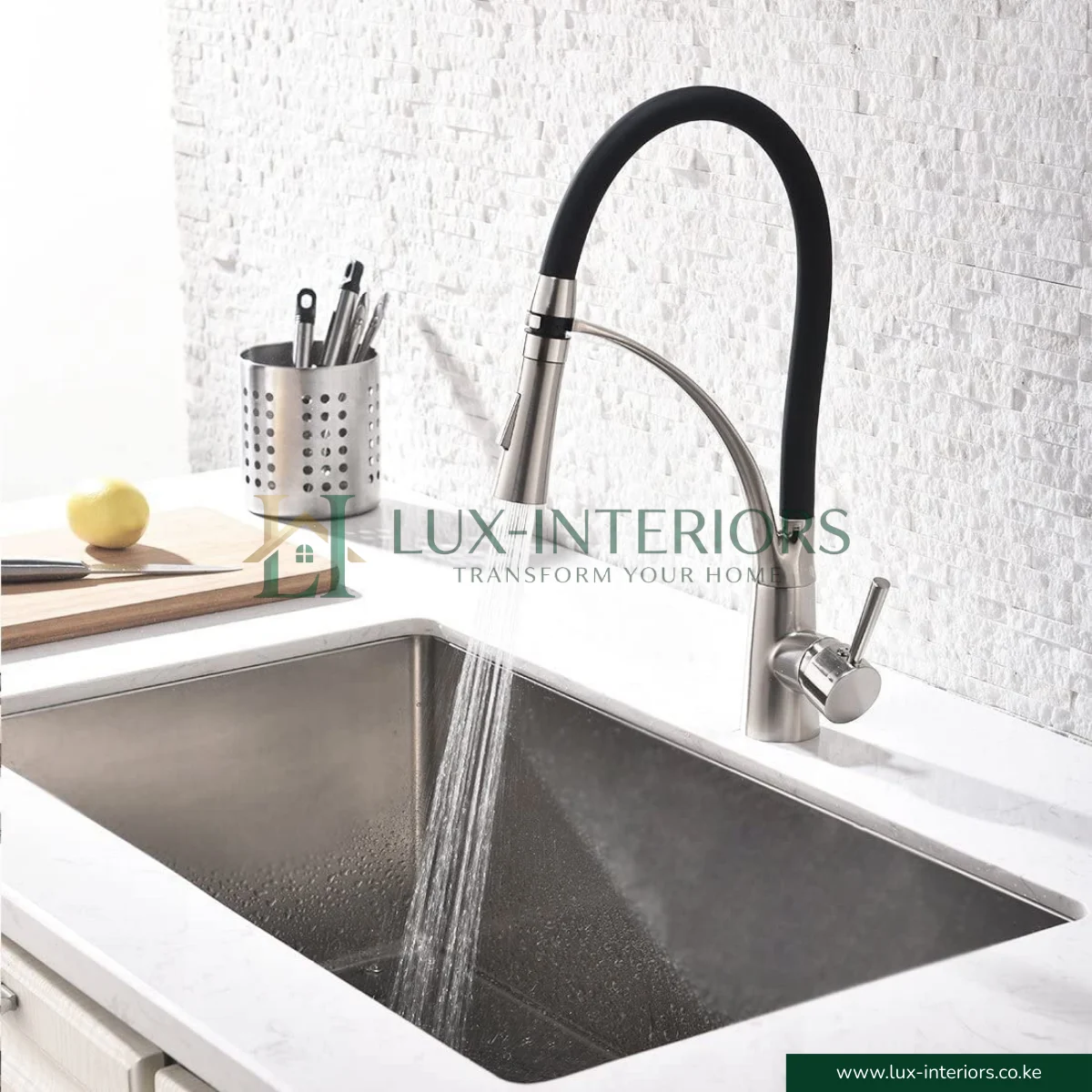
A beautiful kitchen sink paired with a matching high-end tap can transform the space from a “work zone” into a “design feature.”
When we handle a kitchen redesign, we look at everything—from the pendant lights hanging above the island to the functional hardware that makes life easier.
The Lux-Interiors Expert Perspective
The right hardware isn’t just about function; it’s about peace of mind and home value.
When designing a functional kitchen or utility space in Kenya, many homeowners overlook the quality of their plumbing fixtures,” says Agnes from Lux-Interiors, an interior design expert. “A high-quality washing machine tap and a premium kitchen sink are investments that prevent long-term water damage and elevate the entire aesthetic of the home. Never compromise on the things that hold water back.
Learn more about our design philosophy here.
Transforming Your Utility Space with Lux-Interiors
Are you tired of looking at a cluttered, uninspired laundry or kitchen area? We can help. At Lux-Interiors, we specialize in more than just “decorating.” We create functional masterpieces.
- Lighting: From wall sconces to mirror lights, we make sure you can actually see what you’re doing.
- Kitchen Hardware: Our selection of kitchen sinks and taps are curated for the Kenyan climate and taste.
- Total Redesign: Check out our projects to see how we turn ordinary rooms into luxury experiences.
Whether you need a simple tap replacement or a full-blown renovation including landscape lights and office task lamps, we are your go-to partner in Kenya.

Conclusion: Don’t Let a Small Tap Cause Big Problems
The washing machine tap might be small, but its role is mighty.
By choosing the right material, ensuring proper installation, and matching it with the overall design of your home, you’re not just doing chores—you’re maintaining a lifestyle.
Remember, your home is a reflection of you. Don’t let a leaky, rusty tap be the thing people remember!
If you’re ready to upgrade your kitchen, laundry, or entire home lighting scheme, reach out to us at Lux-Interiors. We bring luxury, functionality, and Kenyan heart to every project.
Contact Us Today:
Email: Email info@lux-interiors.co.ke
Website: www.lux-interiors.co.ke
Explore our services: Lux-Interiors Services
FAQs
1. Can I use a garden tap for my washing machine?
While the threads might match, it’s not recommended for indoor use. Garden taps aren’t designed for the constant high pressure of an indoor plumbing system and might leak or look unsightly. It’s better to use a dedicated washing machine bib tap.
2. Why does my washing machine tap make a banging noise?
This is often called “water hammer.” It happens when the washing machine stops drawing water suddenly, causing a pressure wave. Installing a “water hammer arrestor” or upgrading to a high-quality quarter-turn valve can often solve this.
3. How often should I replace my washing machine hoses and taps?
As a rule of thumb, check your hoses every year for cracks and consider replacing the taps every 5–10 years, or sooner if you notice corrosion or stiff handles.
4. Do I need two taps for my washing machine?
Older machines required both a hot and cold water tap. Most modern machines in Kenya only require a cold water inlet, as they have internal heaters to warm the water to the desired temperature.
5. Does Lux-Interiors provide installation services for kitchen taps and sinks?
Absolutely! When you purchase your fixtures through our shop or hire us for a kitchen redesign, we provide expert guidance and professional installation to ensure everything is perfect.
 No products in the cart.